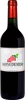
Winery Castillo de OlleriaCrianza
 Red wine


In the mouth this red wine is a powerful.
This wine generally goes well with poultry, beef or veal.
Taste structure of the Crianza from the Winery Castillo de Olleria
Light | Bold | |
Smooth | Tannic | |
Dry | Sweet | |
Soft | Acidic |
In the mouth the Crianza of Winery Castillo de Olleria in the region of Valence is a powerful.
Food and wine pairings with Crianza
Pairings that work perfectly with Crianza



Original food and wine pairings with Crianza

The Crianza of Winery Castillo de Olleria matches generally quite well with dishes of beef, pasta or veal such as recipes of pork tongue with bacon and onions, cannelloni with brocciu from jeanne or roast veal with chanterelles and cream.
Details and technical informations about Winery Castillo de Olleria's Crianza.
Discover the grape variety: Millot Léon
Interspecific crossing between the 101-14 Millardet and Grasset (vitis riparia X vitis rupestris) and the goldriesling obtained by Eugène Kühlmann (1858-1932) around 1911 and marketed around 1921. With these same parents, he obtained among others the Maréchal Foch. Léon Millot is still found in Canada, the United States, Switzerland, Germany, Belgium, Denmark, Sweden, the Netherlands, Poland and England. In France, where it was grown for a long time in Alsace, it is no longer grown in the vineyards, although it is listed in the Official Catalogue of Vine Varieties, list A.
Last vintages of this wine
The best vintages of Crianza from Winery Castillo de Olleria are 0
Informations about the Winery Castillo de Olleria
The Winery Castillo de Olleria is one of of the world's greatest estates. It offers 9 wines for sale in the of Valence to come and discover on site or to buy online.

The wine region of Valence
Valencia is a province in the centre of Spain's sunny east coast, perhaps better known for its oranges (and paella) than its wine. The administrative Center of Valencia is the city of the same name, the third largest in Spain and the largest port on the Mediterranean. Archaeological evidence suggests that wine making in Valencia dates back more than a thousand years, but the region has never been particularly prominent on the world wine map. In modern times, Valencia's wine production has focused on quantity rather than quality, although this is gradually changing.
The word of the wine: Ovoids (tanks)
Egg-shaped vats used for wine making and maturing that favour the natural suspension of the lees thanks to the vortex movements, which give the wine more fat and fruity aromas.