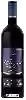
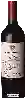
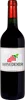
Winery CastelmaureSaint-Félix de Castelmaure
 Red wine



In the mouth this red wine is a powerful with a nice balance between acidity and tannins.
This wine generally goes well with beef, veal or pasta.
Taste structure of the Saint-Félix de Castelmaure from the Winery Castelmaure
Light | Bold | |
Smooth | Tannic | |
Dry | Sweet | |
Soft | Acidic |
In the mouth the Saint-Félix de Castelmaure of Winery Castelmaure in the region of Languedoc-Roussillon is a powerful with a nice balance between acidity and tannins.
Wine flavors and olphactive analysis


On the nose the Saint-Félix de Castelmaure of Winery Castelmaure in the region of Languedoc-Roussillon often reveals types of flavors of cassis, dark fruit or oak and sometimes also flavors of black fruit.
Food and wine pairings with Saint-Félix de Castelmaure
Pairings that work perfectly with Saint-Félix de Castelmaure



Original food and wine pairings with Saint-Félix de Castelmaure
The Saint-Félix de Castelmaure of Winery Castelmaure matches generally quite well with dishes of beef, pasta or veal such as recipes of lamb skewers, pasta with alfredo sauce or veal escalope with marsala.
Details and technical informations about Winery Castelmaure's Saint-Félix de Castelmaure.
Discover the grape variety: Planta nova
A very old indigenous grape variety that has been cultivated for a very long time in Spain, more precisely in the western region of Valencia, where it is practically no longer multiplied today. It is said to be the result of a natural cross between the heftakilo and the rojal tinta, which are both black varieties. Planta nova can still be found in Portugal, Argentina, South Africa, ... almost unknown in France. A long time ago it was also harvested as a table grape, which is no longer the case today.
Last vintages of this wine
The best vintages of Saint-Félix de Castelmaure from Winery Castelmaure are 2018, 2017, 2016, 2015 and 2010.
Informations about the Winery Castelmaure
The Winery Castelmaure is one of of the world's great estates. It offers 66 wines for sale in the of Corbières to come and discover on site or to buy online.

The wine region of Corbières
Corbières is an important appellation in the Languedoc-roussillon">Languedoc-Roussillon region of southern France. It is one of the best known and most productive appellations in the Languedoc. The Corbières vineyards produce large quantities of red and rosé wines, as well as a growing number of white wines. The reds are the strongest Part of the appellation; they are reputedly Rich and herbal, made from Grenache, Syrah, Mourvèdre, Lledoner Pelut and Carignan.
The wine region of Languedoc-Roussillon
Languedoc (formerly Coteaux du Languedoc) is a key appellation used in the Languedoc-Roussillon wine region of southern France. It covers Dry table wines of all three colors (red, white and rosé) from the entire region, but leaves Sweet and Sparkling wines to other more specialized appellations. About 75% of all Languedoc wines are red, with the remaining 25% split roughly down the middle between whites and rosés. The appellation covers most of the Languedoc region and almost a third of all the vineyards in France.
The word of the wine: Muscat blanc à petits grains
A white grape variety cultivated since antiquity on the shores of the Mediterranean, it is considered the noblest of the muscats. It is mainly used to make sweet wines, often from mutage. In France, it is the sole variety used in many natural sweet wines: muscat-de-frontignan, muscat-de-mireval, muscat-de-lunel, muscat-de-saint-jean-de-minervois, muscat-de-beaumes-de-venise, muscat-du-cap-corse. Combined with Muscat d'Alexandrie, it gives Muscat-de-Rivesaltes. It is also used to make sparkling white wines (clairette-de-die; moscato d'asti and asti spumante in Italy) and dry wines (alsace-muscat). Powerfully aromatic and complex, its wines evoke fresh grapes, roses, exotic fruits, citrus fruits and spices.