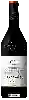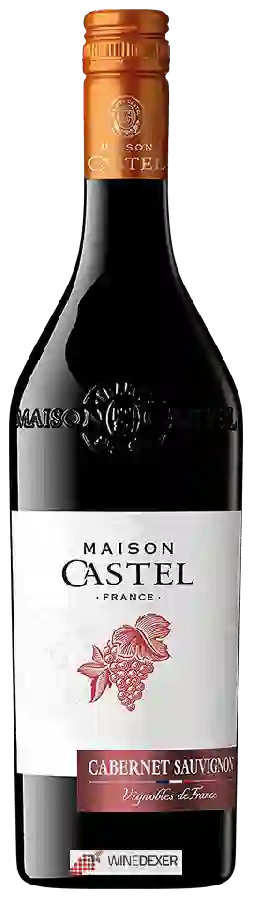
Winery CastelCabernet Sauvignon
 Red wine


This wine is composed of 100% of the grape variety Cabernet Sauvignon.
This wine generally goes well with poultry, beef or lamb.

Wine flavors and olphactive analysis



On the nose the Cabernet Sauvignon of Winery Castel in the region of Pays d'Oc often reveals types of flavors of vanilla, non oak or oak and sometimes also flavors of spices, black fruit.
Food and wine pairings with Cabernet Sauvignon
Pairings that work perfectly with Cabernet Sauvignon



Original food and wine pairings with Cabernet Sauvignon

The Cabernet Sauvignon of Winery Castel matches generally quite well with dishes of beef, lamb or spicy food such as recipes of venison stew to be prepared the day before, lamb stew with yoghurt and coriander or monkfish (anglerfish) à la sétoise.
Details and technical informations about Winery Castel's Cabernet Sauvignon.
Discover the grape variety: Cabernet-Sauvignon
Structured, tannic reds, deeply coloured, with aromas of blackcurrant, blackberry, cedar, tobacco and graphite, underpinned by firm acidity and fine ageing potential. Cornerstone of the great Médoc estates (Pauillac, Saint-Estèphe, Saint-Julien) and signature of Napa Valley, Coonawarra and Maipo. The world's most planted red variety, a natural cross of Cabernet Franc x Sauvignon Blanc born in Bordeaux.
Last vintages of this wine
The best vintages of Cabernet Sauvignon from Winery Castel are 2016, 2017, 2015
Informations about the Winery Castel
The Winery Castel is one of of the world's great estates. It offers 114 wines for sale in the of Pays d'Oc to come and discover on site or to buy online.

The wine region of Pays d'Oc
The single-grape IGP par excellence: modern, accessible, frank and fruity wines, the popular signature of the Midi. Spicy Syrah reds (pepper, blackberry), round Merlot, structured Cabernet, generous Grenache, supple Cinsault. Crisp, tangy rosés. Opulent Chardonnay whites, lively Sauvignon, floral, apricoty Viognier.
The word of the wine: Old vines
There are no specific regulations governing the term "vieilles vignes". After 20 to 25 years, the yields stabilize and tend to decrease, the vines are deeply rooted, and the grapes that come from them give richer, more concentrated, more sappy wines, expressing with more nuance the characteristics of their terroir. It is possible to find plots of vines that claim to be a century old.