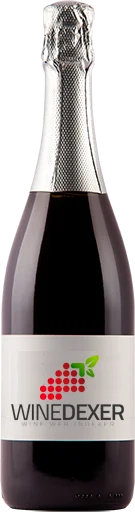
Winery Cascina S.MariaPignoletto Frizzante
 Sparkling wine


This wine generally goes well with
Details and technical informations about Winery Cascina S.Maria's Pignoletto Frizzante.
Discover the grape variety: Couderc noir
Natural interspecific crossing between Jaeger 70 (Vitis Rupestris x Vitis Lincecumii) and an unknown Vitis Vinifera discovered by Eugène Contassot, the seeds from this crossing having been offered to/seeded by Georges Couderc. This direct-producing hybrid was the most widely planted, particularly in the south of France. There are still a few strains in production today, but it is practically no longer multiplied, although it is registered in the Official Catalogue of Vine Varieties, list A1. - Synonymy: Couderc 7120, Contassot 20 (for all the synonyms of the varieties, click here!).
Last vintages of this wine
The best vintages of Pignoletto Frizzante from Winery Cascina S.Maria are 0
Informations about the Winery Cascina S.Maria
The Winery Cascina S.Maria is one of of the world's great estates. It offers 18 wines for sale in the of Emilia to come and discover on site or to buy online.

The wine region of Emilia
The wine region of Emilia is located in the region of Émilie-Romagne of Italy. We currently count 397 estates and châteaux in the of Emilia, producing 1004 different wines in conventional, organic and biodynamic agriculture. The wines of Emilia go well with generally quite well with dishes .
The wine region of Emilia-Romagna
Romagna/emilia">Emilia-Romagna is a Rich and fertile region in Northern Italy, and one of the country's most prolific wine-producing regions, with over 58,000 hectares (143,320 acres) of vines in 2010. It is 240 kilometers (150 miles) wide and stretches across almost the entire northern Italian peninsula, sandwiched between Tuscany to the South, Lombardy and Veneto to the north and the Adriatic Sea to the east. Nine miles of Liguria is all that separates Emilia-Romagna from the Ligurian Sea, and its uniqueness as the only Italian region with both an east and west coast. Emilia-Romagna's wine-growing heritage dates back to the seventh century BC, making it one of the oldest wine-growing regions in Italy.
The word of the wine: Monopoly (raw)
Cru exploited exclusively by a domain. The famous Romanée Conti is a monopoly cru.