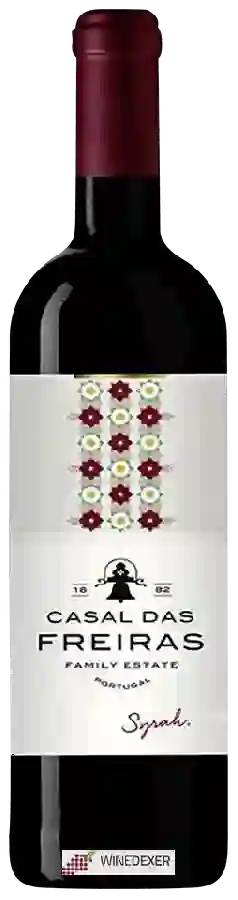
Winery Casal das FreirasSyrah
 Red wine



In the mouth this red wine is a powerful.
This wine generally goes well with poultry, beef or veal.

Taste structure of the Syrah from the Winery Casal das Freiras
Light | Bold | |
Smooth | Tannic | |
Dry | Sweet | |
Soft | Acidic |
In the mouth the Syrah of Winery Casal das Freiras in the region of Tejo is a powerful.
Food and wine pairings with Syrah
Pairings that work perfectly with Syrah



Original food and wine pairings with Syrah

The Syrah of Winery Casal das Freiras matches generally quite well with dishes of beef, pasta or veal such as recipes of beef tongue in hot sauce, quiche with mixed vegetables or guinea fowl with olives.
Details and technical informations about Winery Casal das Freiras's Syrah.
Discover the grape variety: Barras
Simple and fruity light reds with a clear ruby robe, soft tannins and an airy palate with moderate acidity, showing undemonstrative aromas of red fruits. Now almost extinct from commercial cultivation, preserved in INRAE ampelographic collections, it bears witness to the varietal diversity of the pre-phylloxera South-West vineyard. Rare French black grape, once cultivated in the South-West.
Last vintages of this wine
The best vintages of Syrah from Winery Casal das Freiras are 2015, 2016, 0, 2018 and 2017.
Informations about the Winery Casal das Freiras
The Winery Casal das Freiras is one of of the world's greatest estates. It offers 9 wines for sale in the of Tejo to come and discover on site or to buy online.

The wine region of Tejo
West-central Portuguese region along the Tagus, formerly Ribatejo, 17,000 ha. Supple, fruity reds with signature notes of plum, cherry, Mediterranean herbs and sweet spices, round tannins and a generous palate - fleshy everyday wines. Flagship Castelão (blackberry, tobacco), concentrated Trincadeira, perfumed Touriga Nacional (violet, black fruits), spicy Tinta Roriz. Whites: floral Fernão Pires and lively citrusy Arinto.
The word of the wine: Classified growth
Place name or castle subject to a classification (Médoc classification of 1855, classified growths of Alsace...)