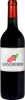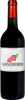
Winery Casal BrancoCapoeira Tinto
 Red wine


In the mouth this red wine is a powerful.
This wine generally goes well with poultry, beef or veal.
Taste structure of the Capoeira Tinto from the Winery Casal Branco
Light | Bold | |
Smooth | Tannic | |
Dry | Sweet | |
Soft | Acidic |
In the mouth the Capoeira Tinto of Winery Casal Branco in the region of Tejo is a powerful.
Food and wine pairings with Capoeira Tinto
Pairings that work perfectly with Capoeira Tinto



Original food and wine pairings with Capoeira Tinto

The Capoeira Tinto of Winery Casal Branco matches generally quite well with dishes of beef, pasta or veal such as recipes of quick meatloaf, lasagne simplissimo or chicken supreme with morels.
Details and technical informations about Winery Casal Branco's Capoeira Tinto.
Discover the grape variety: Cabernet-Sauvignon
Cabernet-Sauvignon noir is a grape variety that originated in France (Bordeaux). It produces a variety of grape specially used for wine making. It is rare to find this grape to eat on our tables. This variety of grape is characterized by small bunches, and small grapes. Cabernet-Sauvignon noir can be found in many vineyards: South-West, Loire Valley, Languedoc & Roussillon, Cognac, Bordeaux, Armagnac, Rhone Valley, Provence & Corsica, Savoie & Bugey, Beaujolais.
Last vintages of this wine

The best vintages of Capoeira Tinto from Winery Casal Branco are 2010, 2016, 2017, 2015 and 2014.
Informations about the Winery Casal Branco
The Winery Casal Branco is one of of the world's great estates. It offers 45 wines for sale in the of Tejo to come and discover on site or to buy online.

The wine region of Tejo
Tejo is a wine region in CentralPortugal which covers the same area as the Ribatejo province, just inland from the major city of Lisbon. The wine appellation's name was changed from Ribatejo in 2009. The entire region may use the Tejo VR (Vinho Regional) designation, similar to the French IGP/Vin de Pays, while some areas produce wines labeled with the higher-level Do Tejo DOC (Denominação de Origem Controlada). A Warm, Dry area, it is also Portugal's only landlocked region – although it is influenced considerably by the Tejo river.
The word of the wine: Chaptalization
The addition of sugar at the time of fermentation of the must, an ancient practice, but theorized by Jean-Antoine Chaptal at the dawn of the 19th century. The sugar is transformed into alcohol and allows the natural degree of the wine to be raised in a weak or cold year, or - more questionably - when the winegrower has a harvest that is too large to obtain good maturity.