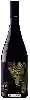
Winery Carpe DiemCarpe Diem Gran Reserva Shiraz
 Red wine


In the mouth this red wine is a powerful.
This wine generally goes well with poultry, beef or game (deer, venison).
Taste structure of the Carpe Diem Gran Reserva Shiraz from the Winery Carpe Diem
Light | Bold | |
Smooth | Tannic | |
Dry | Sweet | |
Soft | Acidic |
In the mouth the Carpe Diem Gran Reserva Shiraz of Winery Carpe Diem in the region of South is a powerful.
Food and wine pairings with Carpe Diem Gran Reserva Shiraz
Pairings that work perfectly with Carpe Diem Gran Reserva Shiraz



Original food and wine pairings with Carpe Diem Gran Reserva Shiraz

The Carpe Diem Gran Reserva Shiraz of Winery Carpe Diem matches generally quite well with dishes of beef, lamb or game (deer, venison) such as recipes of provencal stew, ramadan berber soup (harira) or rabbit à la lorientaise.
Details and technical informations about Winery Carpe Diem's Carpe Diem Gran Reserva Shiraz.
Discover the grape variety: Fer
Fer or Fer Servadou, which means "easy to keep" in Occitan, or Mansois in Aveyron or Braucol in Gaillac, is a black grape variety grown in the southwest. It owes its name to its shoots and wood, which are "hard as iron", with medium-sized bunches and firm, juicy berries, and is characterized by its herbaceous taste (which is also found in Cabernet Franc). Iron is a grape variety resistant to frost and disease. Its buds come out late, but its growth accelerates and it matures quite quickly. For a good production, it prefers long pruning. Iron is used alone for the AOC Marcillac wines and in blends for the wines of the Gaillac, Madiran, Béarn and Fronton appellations. These wines have a deep colour, expressive tannins, they are round and fruity (blackcurrant, raspberry and green pepper...)
Last vintages of this wine
The best vintages of Carpe Diem Gran Reserva Shiraz from Winery Carpe Diem are 2015, 0
Informations about the Winery Carpe Diem
The Winery Carpe Diem is one of of the world's greatest estates. It offers 18 wines for sale in the of Itata Valley to come and discover on site or to buy online.

The wine region of Itata Valley
Itata Valley is a wine region in the Southern end of Chile's Long, thin wine producing zone. This historical, cool-Climate region is dominated by Plantings of Carignan, Muscat of Alexandria and Pais (AKA Mission, aimed more at domestic consumption), although producers are beginning to plant more modern grape varieties like Cabernet Sauvignon, Cabernet Franc, Pinot Noir and Chardonnay. Itata's boundaries cover an area measuring roughly 100 kilometers (60 miles) from North to south and only a little less from east to west, although given the small quantity of land under Vine, the density of vineyards is low. The area is defined by the convergence of the Itata and Ñuble rivers, and vineyards are mostly found clustered around the towns of Chillán, Quillón and Coelemu.
The wine region of South
Malleco Valley is a Southern wine-growing region in Chile, some 540 kilometers (340 miles) south of the capital, Central-valley/maipo-valley/santiago">Santiago, in the Malleco province. The region is particularly challenging to Grape growers because of its marginal Climate, high rainfall and Short growing season, but the crisp, fresh wines produced here from Chardonnay, Sauvignon Blanc and Pinot Noir. are beginning to attract international attention. The wine industry in Malleco Valley is still in its embryonic stages, and there is less than 40 hectares (100 acres) under Vine here.
The word of the wine: Performance
Quantity of grapes harvested per hectare. In AOC, the average yield is limited on the proposal of the appellation syndicate, validated by the Inao. The use of high-performance plant material (especially clones) and better control of vine diseases have increased yields. This is not without consequences on the quality of the wines (dilution) and on the state of the market (too much wine). We must not over-simplify: low yields are not synonymous with quality, and it is often in years with generous harvests that we find the greatest vintages (1982 and 1986 in Bordeaux, 1996 in Champagne, 1990 and 2005 in Burgundy...).