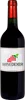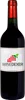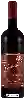
Winery Carl ZùckmayerDornfelder Trocken
 Red wine


In the mouth this red wine is a .
This wine generally goes well with pork, poultry or veal.
Taste structure of the Dornfelder Trocken from the Winery Carl Zùckmayer
Light | Bold | |
Smooth | Tannic | |
Dry | Sweet | |
Soft | Acidic |
In the mouth the Dornfelder Trocken of Winery Carl Zùckmayer in the region of Rheinhessen is a .
Food and wine pairings with Dornfelder Trocken
Pairings that work perfectly with Dornfelder Trocken



Original food and wine pairings with Dornfelder Trocken

The Dornfelder Trocken of Winery Carl Zùckmayer matches generally quite well with dishes of pasta, veal or pork such as recipes of pasta carbonara, wiener schnitzel or viennese schnitzel or sloth pork loin.
Details and technical informations about Winery Carl Zùckmayer's Dornfelder Trocken.
Discover the grape variety: Dornfelder
German, intraspecific cross made in 1955 by August Karl Herold (1902-1973) between the helfensteiner and the heroldrebe (more details, click here!). With these same parents he also obtained the hegel. The Dornfelder can be found in Switzerland, United Kingdom, Belgium, Germany, Austria, Czech Republic, Canada, United States, ... . Virtually unknown in France, we nevertheless recognize a certain interest in it due to its short phenological cycle and the quality of its wines, both rosé and red.
Last vintages of this wine

The best vintages of Dornfelder Trocken from Winery Carl Zùckmayer are 2017, 0, 2015
Informations about the Winery Carl Zùckmayer
The Winery Carl Zùckmayer is one of of the world's greatest estates. It offers 13 wines for sale in the of Rheinhessen to come and discover on site or to buy online.

The wine region of Rheinhessen
Rheinhessen is Germany's largest region for producing the quality wines of the Qualitätswein bestimmter Anbaugebiete (QbA) and Prädikatswein designations, with roughly 26,500 hectares (65,000 acres) of Vineyard">Vineyards as of 2014. Many of its most significant viticultural areas are favorably influenced by the Rhine river, which runs aLong its North and eastern borders. The Rhine, along with the Nahe river to the west and the Haardt mountains to its South, form a natural border. Rheinhessen covers an area south of Rheingau, north of Pfalz and east of Nahe, and is located within the Rhineland-Palatinate federal state.
The word of the wine: Trimming
A vineyard operation consisting of pruning the upper part of the branches after lifting, either manually or using a trimming machine attached to a high-clearance tractor.