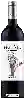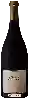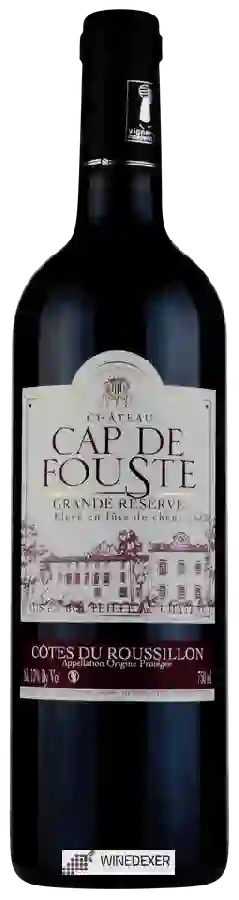
Château Cap de FousteGrande Réserve
 Red wine



In the mouth this red wine is a powerful with a nice balance between acidity and tannins.
This wine generally goes well with beef, veal or pasta.
Taste structure of the Grande Réserve from the Château Cap de Fouste
Light | Bold | |
Smooth | Tannic | |
Dry | Sweet | |
Soft | Acidic |
In the mouth the Grande Réserve of Château Cap de Fouste in the region of Languedoc-Roussillon is a powerful with a nice balance between acidity and tannins.
Food and wine pairings with Grande Réserve
Pairings that work perfectly with Grande Réserve



Original food and wine pairings with Grande Réserve
The Grande Réserve of Château Cap de Fouste matches generally quite well with dishes of beef, pasta or veal such as recipes of beef with panang curry (red curry), pasta with tuna and tomato or cordon bleu with veal and cured ham.
Details and technical informations about Château Cap de Fouste's Grande Réserve.
Discover the grape variety: Petit Bouschet
Crossbreeding carried out in 1829 by Louis Bouschet de Bernard (father of Henri Bouschet, also known for his numerous varieties) between the aramon and the teinturier. It was practically multiplied all over the world. Today, it is an extinct grape variety and can only be found in a few private or public collections and conservatories.
Last vintages of this wine
The best vintages of Grande Réserve from Château Cap de Fouste are 2008, 2014, 2011, 2015 and 2010.
Informations about the Château Cap de Fouste
The Château Cap de Fouste is one of of the world's greatest estates. It offers 23 wines for sale in the of Côtes du Roussillon to come and discover on site or to buy online.

The wine region of Côtes du Roussillon
Côtes du Roussillon is an appellation contrôlée for red, white and rosé wines from the Roussillon wine region in southern France. It covers the eastern half of the administrative district of the Pyrénées-Orientales, on the eastern edge of the Pyrenees. The western half of the Pyrenees-Orientales is simply too mountainous for effective viticulture. In the Côtes du Roussillon wine-growing area is the Aspres sub-region.
The wine region of Languedoc-Roussillon
Languedoc (formerly Coteaux du Languedoc) is a key appellation used in the Languedoc-Roussillon wine region of southern France. It covers Dry table wines of all three colors (red, white and rosé) from the entire region, but leaves Sweet and Sparkling wines to other more specialized appellations. About 75% of all Languedoc wines are red, with the remaining 25% split roughly down the middle between whites and rosés. The appellation covers most of the Languedoc region and almost a third of all the vineyards in France.
The word of the wine: Bordeaux barrel
Barrels of 220 to 225 litres. The toasting of the barrel to bend the staves (curved boards used to make the barrels) can vary according to the coopers and the demand. A gentle and slow toasting has little effect on the aromas. On the other hand, a strong toasting gives aromas of coffee or cocoa which will influence the taste of the wine. A wine barrel has already been aged for a year and has less impact on the wine than a new barrel.