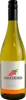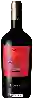
Winery Cantine Della CorteTre Fonti 0.3
 Red wine


In the mouth this red wine is a powerful.
This wine generally goes well with beef, game (deer, venison) or lamb.
Taste structure of the Tre Fonti 0.3 from the Winery Cantine Della Corte
Light | Bold | |
Smooth | Tannic | |
Dry | Sweet | |
Soft | Acidic |
In the mouth the Tre Fonti 0.3 of Winery Cantine Della Corte in the region of Veneto is a powerful.
Food and wine pairings with Tre Fonti 0.3
Pairings that work perfectly with Tre Fonti 0.3



Original food and wine pairings with Tre Fonti 0.3

The Tre Fonti 0.3 of Winery Cantine Della Corte matches generally quite well with dishes of beef, pasta or lamb such as recipes of baeckeoffe, mascarpone pasta with tomato sauce or leg of lamb with baked potatoes.
Details and technical informations about Winery Cantine Della Corte's Tre Fonti 0.3.
Discover the grape variety: Italia
Intraspecific cross between Bicane and Hamburg Muscat obtained in Italy in 1911 by Luigi and Alberto Pirovano of Vaprio d'Adda, entered in the Official Catalogue of Table Grape Varieties, list A1.
Last vintages of this wine
The best vintages of Tre Fonti 0.3 from Winery Cantine Della Corte are 2017, 2016, 0
Informations about the Winery Cantine Della Corte
The Winery Cantine Della Corte is one of of the world's greatest estates. It offers 51 wines for sale in the of Veneto to come and discover on site or to buy online.

The wine region of Veneto
Veneto is an important and growing wine region in northeastern Italy. Veneto is administratively Part of the Triveneto area, aLong with its smaller neighbors, Trentino-Alto Adige and Friuli-Venezia Giulia. In terms of geography, culture and wine styles, it represents a transition from the Alpine and Germanic-Slavic end of Italy to the warmer, drier, more Roman lands to the South. Veneto is slightly smaller than the other major Italian wine regions - Piedmont, Tuscany, Lombardy, Puglia and Sicily - but it produces more wine than any of them.
The word of the wine: Raw
A term whose meaning varies according to the region (terroir or estate), but which everywhere contains the idea of identifying a wine with a specific place of production.