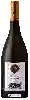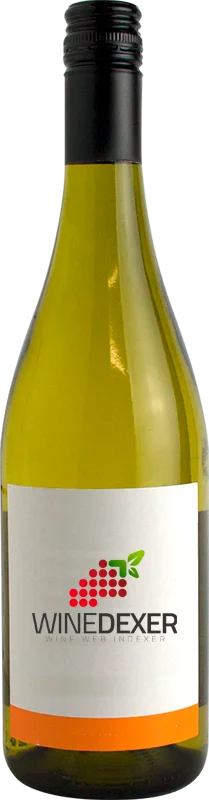
Winery Caballo de OroSauvignon Blanc
 White wine


In the mouth this white wine is a with a nice freshness.
This wine generally goes well with vegetarian, shellfish or goat cheese.
Taste structure of the Sauvignon Blanc from the Winery Caballo de Oro
Light | Bold | |
Dry | Sweet | |
Soft | Acidic |
In the mouth the Sauvignon Blanc of Winery Caballo de Oro in the region of Central Valley is a with a nice freshness.
Food and wine pairings with Sauvignon Blanc
Pairings that work perfectly with Sauvignon Blanc


Original food and wine pairings with Sauvignon Blanc
The Sauvignon Blanc of Winery Caballo de Oro matches generally quite well with dishes of shellfish, vegetarian or goat cheese such as recipes of marco polo salad, vegan leek and tofu quiche or butternut squash stuffed with goat cheese, thyme and garlic.
Details and technical informations about Winery Caballo de Oro's Sauvignon Blanc.
Discover the grape variety: Panse précoce
Most certainly finding its first origins in southern Provence, registered in the Official Catalogue of table grape varieties list A1. According to genetic analyses published in Montpellier (Hérault), it is the result of a cross between the bicane and the pascal blanc. It should not be confused with the foster' white grown in Italy and wrongly called panse précoce. Finally, it can also be confused with the Panse de Provence, which has downy-pubescent leaves and ripens in the second half of the year.
Last vintages of this wine

The best vintages of Sauvignon Blanc from Winery Caballo de Oro are 2014, 2018, 2015, 0 and 2017.
Informations about the Winery Caballo de Oro
The Winery Caballo de Oro is one of of the world's greatest estates. It offers 8 wines for sale in the of Central Valley to come and discover on site or to buy online.

The wine region of Central Valley
The Central Valley (El Valle Central) of Chile is one of the most important wine-producing areas in South America in terms of Volume. It is also one of the largest wine regions, stretching from the Maipo Valley (just south of Santiago) to the southern end of the Maule Valley. This is a distance of almost 250 miles (400km) and covers a number of Climate types. The Central Valley wine region is easily (and often) confused with the geological Central Valley, which runs north–south for more than 620 miles (1000km) between the Pacific Coastal Ranges and the lower Andes.
The word of the wine: Farm
Wine dominated by a strong acidity and/or biting tannins. In this case, the components of the wine need to melt, i.e. to harmonize during the maturation in the cellar.