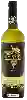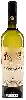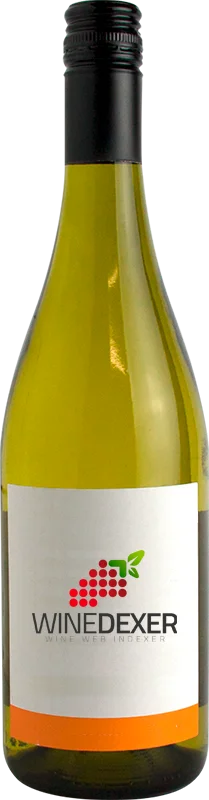
Winery BudureascaPremium Fume dry
 White wine



This wine generally goes well with vegetarian, rich fish (salmon, tuna etc) or shellfish.
Wine flavors and olphactive analysis


On the nose the Premium Fume dry of Winery Budureasca in the region of Dealu Mare often reveals types of flavors of tree fruit, citrus fruit.
Food and wine pairings with Premium Fume dry
Pairings that work perfectly with Premium Fume dry



Original food and wine pairings with Premium Fume dry
The Premium Fume dry of Winery Budureasca matches generally quite well with dishes of rich fish (salmon, tuna etc), shellfish or vegetarian such as recipes of tunisian bricks, yakisoba (fried noodles) or goat cheese and bacon quiche.
Details and technical informations about Winery Budureasca's Premium Fume dry.
Discover the grape variety: Ahmeur bou A(h)meur
Its origin would be from North Africa (Algeria/Kabylie) or Spain. It is a variety that was often grown on trellises in front of houses and sometimes its grapes were preserved in brandy to be enjoyed throughout the year. It is found in North Africa, the United States (California), Argentina, Spain and Portugal. In France, it is not well known because of its susceptibility to winter frosts and its late ripening.
Last vintages of this wine
The best vintages of Premium Fume dry from Winery Budureasca are 2013, 2015, 2017, 0 and 2014.
Informations about the Winery Budureasca
The Winery Budureasca is one of of the world's greatest estates. It offers 88 wines for sale in the of Dealu Mare to come and discover on site or to buy online.

The wine region of Dealu Mare
Dealu Mare DOC is a wine region located in the southern Part of Romania in Prahova and Buzau counties. It’s latitude of 45° compares with Bordeaux and Tuscany, and is one of the countries most highly regarded DOCs, especially for its red wines. The Vineyard zone stretches for 65 kilometers (40 miles) across the southern Carpathian Hills (Dealu Mare translates as Big Hill). Its width ranges from 3 to 12 kilometers (2-7.
The word of the wine: Liquid
Sweet wine containing more than 50 grams of residual sugar per liter. Sweet wines are made from grapes often affected by botrytis cinerea and concentrated either by passerillage (drying of the grapes on the vine stock), or after the harvest (straw wines), or by the cold (ice wines).