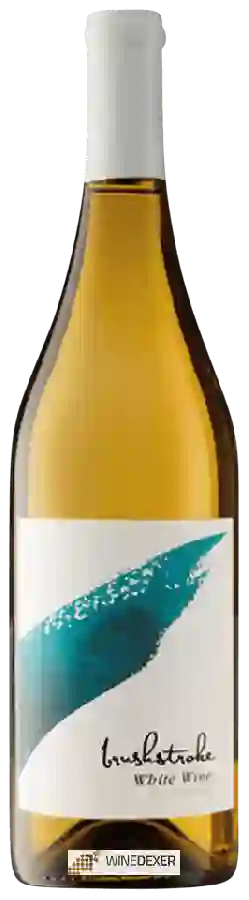
Winery BrushstrokeWhite
 White wine



In the mouth this white wine is a powerful.
This wine generally goes well with pork, poultry or shellfish.
Taste structure of the White from the Winery Brushstroke
Light | Bold | |
Dry | Sweet | |
Soft | Acidic |
In the mouth the White of Winery Brushstroke in the region of California is a powerful.
Food and wine pairings with White
Pairings that work perfectly with White



Original food and wine pairings with White

The White of Winery Brushstroke matches generally quite well with dishes of pasta, pork or shellfish such as recipes of quiche with tartiflette, baked pork chops or shrimp marinade.
Details and technical informations about Winery Brushstroke's White.
Discover the grape variety: Pinot noir
Pinot noir is an important red grape variety in Burgundy and Champagne, and its reputation is well known! Great wines such as the Domaine de la Romanée Conti elaborate their wines from this famous grape variety, and make it a great variety. When properly vinified, pinot noit produces red wines of great finesse, with a wide range of aromas depending on its advancement (fruit, undergrowth, leather). it is also the only red grape variety authorized in Alsace. Pinot Noir is not easily cultivated beyond our borders, although it has enjoyed some success in Oregon, the United States, Australia and New Zealand.
Last vintages of this wine
The best vintages of White from Winery Brushstroke are 2016, 0
Informations about the Winery Brushstroke
The Winery Brushstroke is one of of the world's greatest estates. It offers 3 wines for sale in the of California to come and discover on site or to buy online.

The wine region of California
California is the largest and most important wine region in the United States. It represents the southern two-thirds (850 miles or 1,370 kilometers) of the country's west coast. (Oregon and Washington make up the rest. ) The state also spans nearly 10 degrees of latitude.
The word of the wine: Deposit
Solid particles that can naturally coat the bottom of a bottle of wine. It is rather a guarantee that the wine has not been mistreated: in fact, to avoid the natural deposit, rather violent processes of filtration or cold passage (- 7 or - 8 °C) are used in order to precipitate the tartar (the small white crystals that some people confuse with crystallized sugar: just taste to dissuade you from it)