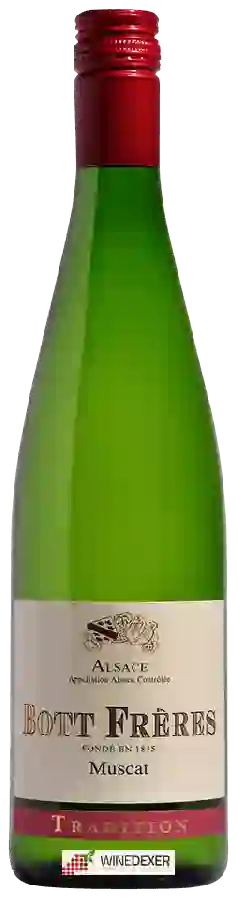
Winery Bott FreresTradition Muscat
 White wine


This wine generally goes well with spicy food and sweet desserts.

Wine flavors and olphactive analysis


On the nose the Tradition Muscat of Winery Bott Freres in the region of Alsace often reveals types of flavors of citrus, honey or earth and sometimes also flavors of citrus fruit.
Food and wine pairings with Tradition Muscat
Pairings that work perfectly with Tradition Muscat


Original food and wine pairings with Tradition Muscat
The Tradition Muscat of Winery Bott Freres matches generally quite well with dishes of spicy food or sweet desserts such as recipes of keftas tajine with eggs or quick chocolate fudge cake.
Details and technical informations about Winery Bott Freres's Tradition Muscat.
Discover the grape variety: Xynisteri
Lively, fresh whites to drink young, with a pale golden robe and an airy palate, with signature aromas of citrus (lemon), white flowers, green apple and mineral notes. Also excels as a passito in the mythical Commandaria sweet wine. Essential component of Commandaria (with Mavro), also producing modern dry Cypriot whites. Autochthonous white variety of Cyprus, the most planted on the island.
Last vintages of this wine

The best vintages of Tradition Muscat from Winery Bott Freres are 2018, 2017, 2016, 2015 and 2013.
Informations about the Winery Bott Freres
The Winery Bott Freres is one of of the world's greatest estates. It offers 38 wines for sale in the of Alsace to come and discover on site or to buy online.

The wine region of Alsace
Capital of great French aromatic whites, most often dry and single-varietal. Straight, mineral Riesling (lemon, gunflint), opulent, exuberant Gewurztraminer (lychee, rose, spices), round, smoky Pinot Gris, floral, crisp Muscat, supple Pinot Blanc. Fine, fruity Crémants d'Alsace, exceptional sweet Vendanges Tardives and Sélection de Grains Nobles. 15,500 ha at the foot of the Vosges on varied soils, 51 Grands Crus since 1975.
The word of the wine: Sapid
Said of a wine rich in flavours.