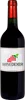
Winery BoteSailing Boat Tinto
 Red wine



In the mouth this red wine is a powerful with a nice balance between acidity and tannins.
This wine generally goes well with poultry, beef or veal.
Taste structure of the Sailing Boat Tinto from the Winery Bote
Light | Bold | |
Smooth | Tannic | |
Dry | Sweet | |
Soft | Acidic |
In the mouth the Sailing Boat Tinto of Winery Bote in the region of Lisboa is a powerful with a nice balance between acidity and tannins.
Wine flavors and olphactive analysis

Food and wine pairings with Sailing Boat Tinto
Pairings that work perfectly with Sailing Boat Tinto



Original food and wine pairings with Sailing Boat Tinto

The Sailing Boat Tinto of Winery Bote matches generally quite well with dishes of beef, pasta or veal such as recipes of polish goulash, eggplant and zucchini lasagna or sliced endives with ham.
Details and technical informations about Winery Bote's Sailing Boat Tinto.
Discover the grape variety: Crimson seedless
Cross between Emperor and C 133-199 obtained in the United States (California) by David Wilder Ramming and Ronald Tarailo and where it is cultivated since 1989. In California, it is today one of the most present varieties of table. It is also found in South America, South Africa, Spain, etc. - Synonymy: USDA selection C 102-26 (for all the synonyms of the varieties, click here!).
Last vintages of this wine
The best vintages of Sailing Boat Tinto from Winery Bote are 2015, 2017, 0, 2016
Informations about the Winery Bote
The Winery Bote is one of of the world's greatest estates. It offers 12 wines for sale in the of Lisboa to come and discover on site or to buy online.

The wine region of Lisboa
Lisboa (formerly Estremadura) is a prolific wine region located at the Center of Portugal's Atlantic coast. Despite being one of the country's most productive winemaking areas, its name remains relatively obscure in wine terms, as its wines have traditionally been labeled with the names of the local sub-regions, which include Alenquer, Bucelas and Colares. The region is also home to Portugal's capital, Lisbon. The region fell under the VR (Vinho Regional) classification until 2008, when the category was renamed IGP (Indicaciones Geográficas Protegidas) to bring it into line with the rest of Europe.
The word of the wine: Malvasia
Name given locally to various grape varieties, notably pinot gris (Pays nantais) and vermentino (Provence and Corsica).