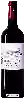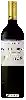
Château le BonalguetBordeaux Rouge
 Red wine


In the mouth this red wine is a powerful with a nice balance between acidity and tannins.
This wine generally goes well with poultry, beef or game (deer, venison).

Taste structure of the Bordeaux Rouge from the Château le Bonalguet
Light | Bold | |
Smooth | Tannic | |
Dry | Sweet | |
Soft | Acidic |
In the mouth the Bordeaux Rouge of Château le Bonalguet in the region of Bordeaux is a powerful with a nice balance between acidity and tannins.
Wine flavors and olphactive analysis




On the nose the Bordeaux Rouge of Château le Bonalguet in the region of Bordeaux often reveals types of flavors of cherry, oaky or blackberry and sometimes also flavors of vanilla, black currant or non oak.
Food and wine pairings with Bordeaux Rouge
Pairings that work perfectly with Bordeaux Rouge



Original food and wine pairings with Bordeaux Rouge

The Bordeaux Rouge of Château le Bonalguet matches generally quite well with dishes of beef, lamb or game (deer, venison) such as recipes of beef in white wine, leg of lamb in a herb crust with preserved vegetables or rabbit with mustard in a casserole.
Details and technical informations about Château le Bonalguet's Bordeaux Rouge.
Discover the grape variety: Kalecik Karası
Supple, elegant reds with a light ruby robe, silky tannins and an airy palate with fresh acidity, showing signature aromas of red fruits (cherry, strawberry), soft spices, rose and floral notes. Often compared to Pinot Noir for its finesse. One of the great ambassadors of modern Turkish wine, producing refined reds from the Ankara region. Native black grape of central Anatolia, grown mainly around Kalecik.
Last vintages of this wine

The best vintages of Bordeaux Rouge from Château le Bonalguet are 2017, 2016, 2019, 2014 and 2018.
Informations about the Château le Bonalguet
The Château le Bonalguet is one of of the world's greatest estates. It offers 7 wines for sale in the of Libournais to come and discover on site or to buy online.

The wine region of Libournais
Bordeaux right bank around Libourne, the world cradle of great Merlots. Velvety, opulent reds with signature notes of ripe plum, black cherry, truffle, cocoa, leather and sweet spices, round tannins and a fleshy palate - age-worthy wines. Dominant Merlot (70-80%) thrives on cold clay-limestone, complemented by Cabernet Franc (Bouchet) with raspberry and bell-pepper notes. Stars: Saint-Émilion (UNESCO), Pomerol (Pétrus), Fronsac.
The wine region of Bordeaux
World-renowned age-worthy reds, led by round Merlot (plum, black fruit) or firm Cabernet Sauvignon (blackcurrant, cedar, graphite), blended with Cabernet Franc and Petit Verdot for tannic structure. Structured Médoc and Graves, velvety Saint-Émilion and Pomerol. Also crisp dry whites (Sauvignon/Sémillon) and opulent sweet Sauternes with honey and candied fruit. A 110,000 ha Gironde vineyard, 65 appellations, cradle of the 1855 classified growths.
The word of the wine: Mercaptan
Organic compound resulting from the combination of alcohol and sulphide (H2S) producing an unpleasant odour reminiscent of town gas and rotten eggs.