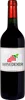
Winery Solar de UrbezoOrganic Garnacha - Syrah
 Red wine



In the mouth this red wine is a powerful with a nice balance between acidity and tannins.
This wine generally goes well with poultry, beef or veal.
Taste structure of the Organic Garnacha - Syrah from the Winery Solar de Urbezo
Light | Bold | |
Smooth | Tannic | |
Dry | Sweet | |
Soft | Acidic |
In the mouth the Organic Garnacha - Syrah of Winery Solar de Urbezo in the region of Vinos de Pago is a powerful with a nice balance between acidity and tannins.
Food and wine pairings with Organic Garnacha - Syrah
Pairings that work perfectly with Organic Garnacha - Syrah



Original food and wine pairings with Organic Garnacha - Syrah

The Organic Garnacha - Syrah of Winery Solar de Urbezo matches generally quite well with dishes of beef, pasta or veal such as recipes of pork shoulder with mustard, pasta with crispy parma ham or turkey ballotine.
Details and technical informations about Winery Solar de Urbezo's Organic Garnacha - Syrah.
Discover the grape variety: Oeillade blanche
It is said to originate from the south of France, most certainly from Provence. Today, it is practically no longer multiplied, although it is registered in the Official Catalogue of vine varieties, list A1. - Synonyms: oeillade blanche, aragnan or araignan blanc, grosse clairette, papadoux, milhaud blanc in the Tarn. Note that many grape varieties have picardan as a synonym. The one described here has nothing in common with cinsaut and it is not the white form of oeillade noire (for all the synonyms of the grape varieties, click here !).
Last vintages of this wine
The best vintages of Organic Garnacha - Syrah from Winery Solar de Urbezo are 2018, 0
Informations about the Winery Solar de Urbezo
The Winery Solar de Urbezo is one of of the world's great estates. It offers 36 wines for sale in the of Vinos de Pago to come and discover on site or to buy online.

The wine region of Vinos de Pago
Vinos de Pago, often abbreviated to VP, is a relatively New category of wine classification in Spain. It was introduced in 2003, to cover individual wineries whose wines fell outside the existing DO system (geographically or stylistically) but were nevertheless of consistently high quality. As of 2017, there were more than a dozen VPs, all of which are notable exceptions in regions not generally associated with high quality wines. More than half are in Castilla-La Mancha, and the rest in Navarra and Utiel-Requena.
The word of the wine: Dish
Wine lacking tone and relief in the mouth.