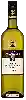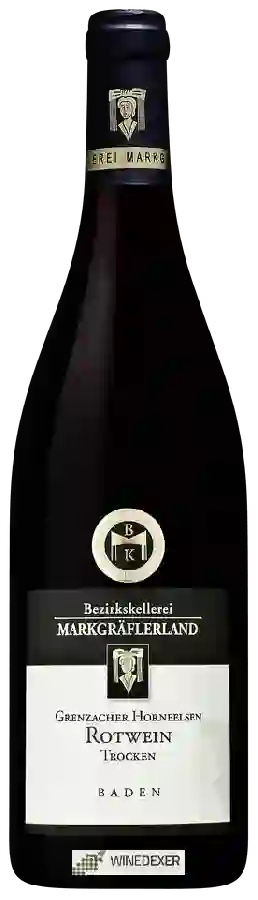
Winery Bezirkskellerei MarkgräflerlandExclusiv Grenzacher Hornfelsen Trocken
 Red wine



This wine generally goes well with beef and mature and hard cheese.
Food and wine pairings with Exclusiv Grenzacher Hornfelsen Trocken
Pairings that work perfectly with Exclusiv Grenzacher Hornfelsen Trocken


Original food and wine pairings with Exclusiv Grenzacher Hornfelsen Trocken
The Exclusiv Grenzacher Hornfelsen Trocken of Winery Bezirkskellerei Markgräflerland matches generally quite well with dishes of beef or mature and hard cheese such as recipes of beef luc lake or gratin comtois.
Details and technical informations about Winery Bezirkskellerei Markgräflerland's Exclusiv Grenzacher Hornfelsen Trocken.
Discover the grape variety: Calabrese
Most certainly of Italian origin, more precisely from Sicily where it is very well known. It should be noted that a certain number of Italian grape varieties bear the synonym or name "calabrese", whether or not followed by an epithet, and care should be taken not to confuse them. Calabrese is also known in the United States, Italy, Bulgaria and Malta. In France, it is virtually absent from the vineyard, although it is listed in the Official Catalogue of Wine Grape Varieties, list A1.
Last vintages of this wine
The best vintages of Exclusiv Grenzacher Hornfelsen Trocken from Winery Bezirkskellerei Markgräflerland are 0
Informations about the Winery Bezirkskellerei Markgräflerland
The Winery Bezirkskellerei Markgräflerland is one of of the world's great estates. It offers 88 wines for sale in the of Baden to come and discover on site or to buy online.

The wine region of Baden
Baden is the southernmost of Germany's 13 official wine regions. It is also the warmest. Its relatively sunny, DryClimate permits the production of good-quality Spätburgunder (Pinot Noir) and ripe, relatively Full-bodied">Full-bodied examples of Grauburgunder (Pinot Gris) and Weissburgunder (Pinot Blanc). These are often made in oaked styles.
The word of the wine: Table wine
A category of wine with no geographical indication on the label, often resulting from blends between wines from different vineyards in France or the EU. These wines are now called "wines without geographical indication" (and "French wines" if they come from the national territory).