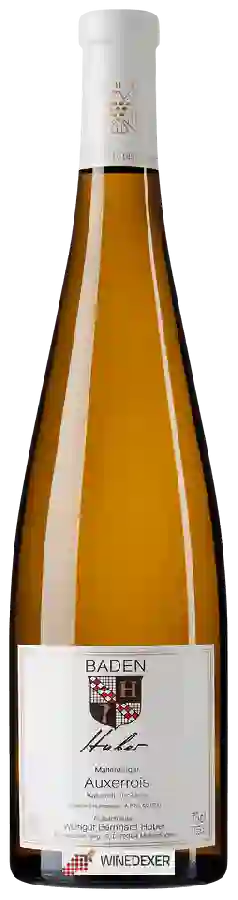
Winery Bernhard HuberMalterdinger Bienenberg Auxerrois Kabinett - Trocken
 White wine



This wine generally goes well with
Wine flavors and olphactive analysis


On the nose the Malterdinger Bienenberg Auxerrois Kabinett - Trocken of Winery Bernhard Huber in the region of Baden often reveals types of flavors of earth, floral.
Details and technical informations about Winery Bernhard Huber's Malterdinger Bienenberg Auxerrois Kabinett - Trocken.
Discover the grape variety: Auxerrois
Auxerrois is a white grape variety native to Lorraine, which is also found in Alsace and in the Loire Valley, where it took off in 1950. Its name comes from the nurseries in Auxerre where it found refuge during the Second World War. Often called Pinot Auxerrois, it is part of the Moselle, Alsace and Côtes-de-Toul AOC grape varieties. Auxerrois should not be confused with côt or malbec, which are red grape varieties from the Cahors region and which may bear the same name. The bunches of Auxerrois are of medium size with small berries. It is a semi-late grape variety whose buds only come out when temperatures are well above 10°C. Auxerrois wines are characterized by finesse and acidity and subtle aromas of exotic fruits, fruits and white flowers. In France, it represents 1,600 hectares of production and some small parcels of Auxerrois are also present in Luxembourg, Germany, Canada and South Africa (2,300 hectares in total).
Last vintages of this wine
The best vintages of Malterdinger Bienenberg Auxerrois Kabinett - Trocken from Winery Bernhard Huber are 0, 2013, 2014
Informations about the Winery Bernhard Huber
The Winery Bernhard Huber is one of of the world's great estates. It offers 63 wines for sale in the of Baden to come and discover on site or to buy online.

The wine region of Baden
Baden is the southernmost of Germany's 13 official wine regions. It is also the warmest. Its relatively sunny, DryClimate permits the production of good-quality Spätburgunder (Pinot Noir) and ripe, relatively Full-bodied">Full-bodied examples of Grauburgunder (Pinot Gris) and Weissburgunder (Pinot Blanc). These are often made in oaked styles.
The word of the wine: Roast
Specific character given by noble rot to sweet wines, which results in a candied taste and aroma.