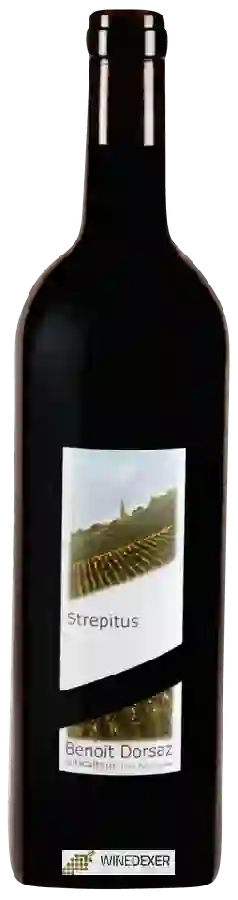
Winery Benoît DorsazStrepitus
 Red wine


This wine is a blend of 4 varietals which are the Gamaret, the Pinot noir, the Gamay noir and the Merlot.
This wine generally goes well with pork, poultry or beef.

Wine flavors and olphactive analysis

Food and wine pairings with Strepitus
Pairings that work perfectly with Strepitus



Original food and wine pairings with Strepitus



The Strepitus of Winery Benoît Dorsaz matches generally quite well with dishes of beef, veal or pork such as recipes of korean bibimbap, vitello alla genovese (roast veal with sponge cake) or quiche with mixed vegetables.
Details and technical informations about Winery Benoît Dorsaz's Strepitus.
Discover the grape variety: Gamaret
Structured, colourful reds with a dense purple robe and firm tannins, featuring aromas of blackcurrant, blackberry, black cherry, spices and peppery notes. Fresh acidity, good performance in oak ageing. Made as a single-variety ageing wine and in many premium Swiss blends with Garanoir, Gamay and Pinot Noir. Star of modern reds from Vaud, Geneva and Valais. A Gamay × Reichensteiner cross created in 1970 at the Pully research station (Switzerland).
Last vintages of this wine

The best vintages of Strepitus from Winery Benoît Dorsaz are 2017, 0, 2015
Informations about the Winery Benoît Dorsaz
The Winery Benoît Dorsaz is one of of the world's greatest estates. It offers 23 wines for sale in the of Valais to come and discover on site or to buy online.

The wine region of Valais
Switzerland's largest vineyard, capital of native grapes. Straight, precise alpine whites: light, floral Chasselas (Fendant), signature Petite Arvine with saline, grapefruit and rhubarb notes, rich, apricoty Amigne, mineral Humagne Blanche. Altitude reds: fine Pinot Noir, crisp Gamay, native Cornalin and Humagne Rouge, spicy and deep. Highly precise alpine age-worthy wines.
The word of the wine: Vinification of sweet wines
Moelleux and liquoreux wines are characterized by the presence of residual sugars (natural sugar of the grape), not transformed into alcohol under the effect of yeasts. The fermentation is stopped by cold and by the addition of sulphur dioxide (sulphur).


