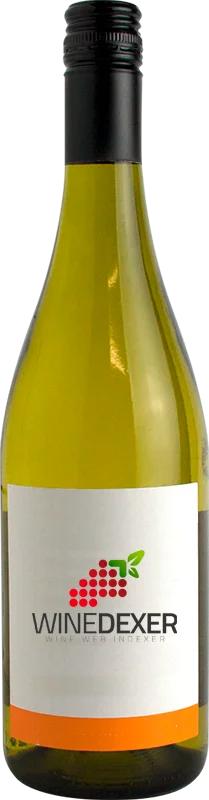
Winery BayerEsslinger Schenkenberg Sauvignon Blanc Spätlese
 White wine
In the mouth this white wine is a with a nice freshness.
This wine generally goes well with vegetarian, shellfish or goat cheese.
Taste structure of the Esslinger Schenkenberg Sauvignon Blanc Spätlese from the Winery Bayer
Light | Bold | |
Dry | Sweet | |
Soft | Acidic |
In the mouth the Esslinger Schenkenberg Sauvignon Blanc Spätlese of Winery Bayer in the region of Württemberg is a with a nice freshness.
Food and wine pairings with Esslinger Schenkenberg Sauvignon Blanc Spätlese
Pairings that work perfectly with Esslinger Schenkenberg Sauvignon Blanc Spätlese



Original food and wine pairings with Esslinger Schenkenberg Sauvignon Blanc Spätlese
The Esslinger Schenkenberg Sauvignon Blanc Spätlese of Winery Bayer matches generally quite well with dishes of shellfish, vegetarian or goat cheese such as recipes of quick crayfish chicken, zucchini and goat cheese quiche or cream of vegetable soup with goat cheese.
Details and technical informations about Winery Bayer's Esslinger Schenkenberg Sauvignon Blanc Spätlese.
Discover the grape variety: Chaouch
The certain origin is not known. We can simply say that this variety was once widely cultivated in Turkey, it is still found in Spain, Italy, Greece, Hungary, Macedonia, Romania, Dalmatia, Serbia, Ukraine, Bulgaria, Russia, North Africa, ... in France it is almost unknown except for some amateur gardeners. Note that it can sometimes be confused with the Beirut date palm, they have the same two synonyms rozaki and afuz ali.
Informations about the Winery Bayer
The Winery Bayer is one of of the world's greatest estates. It offers 15 wines for sale in the of Württemberg to come and discover on site or to buy online.

The wine region of Württemberg
Württemberg is known as Germany's premier red wine region. With almost 11,500 hectares (28,500 acres) of vineyards, it is the fourth-largest wine region in the country. Found adjacent to Baden and South of Franken, Wüttemberg is a particularly hilly and rural wine-region. Almost 70-percent of Württemberg wines are red, predominantly made from Trollinger, SchwarzRiesling and Lemberger.
The word of the wine: Volatile acidity
Acidity resulting essentially from alcoholic fermentation and formed from acetic acids in the free state.