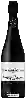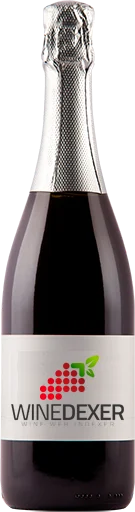
Winery Azienda Agricola CastelvetroRosé de Noir Gran Cuvée Brut
 Sparkling wine



This wine generally goes well with
Details and technical informations about Winery Azienda Agricola Castelvetro's Rosé de Noir Gran Cuvée Brut.
Discover the grape variety: Ravat 51
An interspecific cross obtained by Jean-François Ravat around 1930. Some people give it as parents the 6905 Seibel - or subéreux - and the pinot, to be confirmed however. It can still be found in North America and England, but is practically unknown in France.
Last vintages of this wine
The best vintages of Rosé de Noir Gran Cuvée Brut from Winery Azienda Agricola Castelvetro are 2017, 0
Informations about the Winery Azienda Agricola Castelvetro
The Winery Azienda Agricola Castelvetro is one of of the world's greatest estates. It offers 9 wines for sale in the of Modena to come and discover on site or to buy online.

The wine region of Modena
The wine region of Modena is located in the region of Émilie-Romagne of Italy. Wineries and vineyards like the Domaine Chiarli 1860 or the Domaine Cantina di Sorbara produce mainly wines sparkling, red and sweet. The most planted grape varieties in the region of Modena are Chardonnay, Sangiovese and Ancellotta, they are then used in wines in blends or as a single variety. On the nose of Modena often reveals types of flavors of cherry, spices or vegetal and sometimes also flavors of tropical fruit, floral or non oak.
The wine region of Emilia-Romagna
Romagna/emilia">Emilia-Romagna is a Rich and fertile region in Northern Italy, and one of the country's most prolific wine-producing regions, with over 58,000 hectares (143,320 acres) of vines in 2010. It is 240 kilometers (150 miles) wide and stretches across almost the entire northern Italian peninsula, sandwiched between Tuscany to the South, Lombardy and Veneto to the north and the Adriatic Sea to the east. Nine miles of Liguria is all that separates Emilia-Romagna from the Ligurian Sea, and its uniqueness as the only Italian region with both an east and west coast. Emilia-Romagna's wine-growing heritage dates back to the seventh century BC, making it one of the oldest wine-growing regions in Italy.
The word of the wine: Yeast
Micro-organisms at the base of all fermentative processes. A wide variety of yeasts live and thrive naturally in the vineyard, provided that treatments do not destroy them. Unfortunately, their replacement by laboratory-selected yeasts is often the order of the day and contributes to the standardization of the wine. Yeasts are indeed involved in the development of certain aromas.