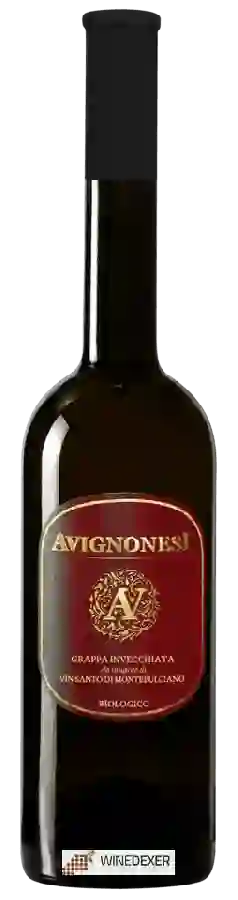
Winery AvignonesiGrappa Riserva Vin Santo di Montepulciano
 Sweet wine
This wine generally goes well with
Details and technical informations about Winery Avignonesi's Grappa Riserva Vin Santo di Montepulciano.
Discover the grape variety: Pagadebiti
The white Pagadebiti is a grape variety originating from Italy. It produces a variety of grape specially used for the elaboration of wine. It is rare to find this grape to eat on our tables. The white Pagadebiti can be found in several vineyards: South-West, Cognac, Bordeaux, Provence & Corsica, Rhone Valley, Loire Valley, Savoie & Bugey, Beaujolais.
Informations about the Winery Avignonesi
The Winery Avignonesi is one of of the world's great estates. It offers 60 wines for sale in the of Vin Santo di Montepulciano to come and discover on site or to buy online.

The wine region of Vin Santo di Montepulciano
The wine region of Vin Santo di Montepulciano is located in the region of Vin Santo of Toscane of Italy. Wineries and vineyards like the Domaine Avignonesi or the Domaine Avignonesi produce mainly wines sweet and white. The most planted grape varieties in the region of Vin Santo di Montepulciano are Sangiovese, they are then used in wines in blends or as a single variety. On the nose of Vin Santo di Montepulciano often reveals types of flavors of non oak, earth or microbio and sometimes also flavors of oak, dried fruit or tree fruit.
The wine region of Tuscany
Tuscany is one of the most famous and prolific wine regions in Europe. It is best known for its Dry red wines made from Sangiovese grapes, which dominate production. These include Chianti, Brunello di Montalcino and Vino Nobile di Montepulciano. The region's Vin Santo is also highly prized, as are its passito dessert wines, though these are produced in comparatively tiny quantities.
The word of the wine: Malic (acid)
An acid that occurs naturally in many wines and is transformed into lactic acid during malolactic fermentation.