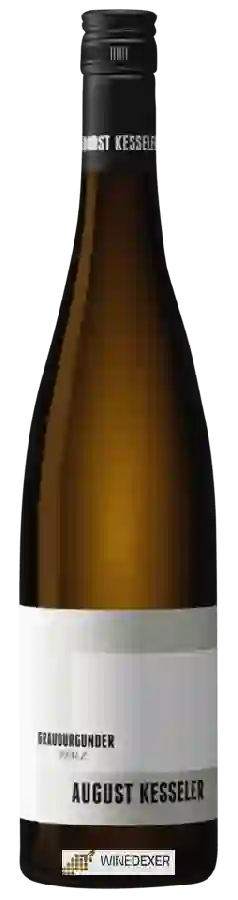
Winery August KesselerGrauburgunder
 White wine



In the mouth this white wine is a .
This wine generally goes well with pork, cured meat or mushrooms.

Taste structure of the Grauburgunder from the Winery August Kesseler
Light | Bold | |
Dry | Sweet | |
Soft | Acidic |
In the mouth the Grauburgunder of Winery August Kesseler in the region of Pfalz is a .
Food and wine pairings with Grauburgunder
Pairings that work perfectly with Grauburgunder


Original food and wine pairings with Grauburgunder

The Grauburgunder of Winery August Kesseler matches generally quite well with dishes of pork, spicy food or mushrooms such as recipes of simple pork roast, chicken with green olives or english breakfast.
Details and technical informations about Winery August Kesseler's Grauburgunder.
Discover the grape variety: Select
Simple, fresh dry whites with a pale golden robe, a supple palate with moderate acidity, and understated aromas of citrus and white flowers. Discreet, rustic profile. Preserved in a few ampelographic collections for its heritage value, this ancient variety has virtually disappeared from commercial cultivation and is studied for its genetic and historical interest.
Last vintages of this wine
The best vintages of Grauburgunder from Winery August Kesseler are 0, 2014
Informations about the Winery August Kesseler
The Winery August Kesseler is one of of the world's great estates. It offers 75 wines for sale in the of Pfalz to come and discover on site or to buy online.

The wine region of Pfalz
Fleshy, dry, fruity Riesling is the region's signature: yellow peach, apricot, ripe citrus, lovely mineral tension. Germany's largest red-wine area (40%), with silky Spätburgunder showing red fruit and spice, darker structured Dornfelder, supple Portugieser. Some rounded Pinot Blanc and Pinot Gris. A 23,640 ha vineyard along the Haardt, among Germany's warmest (>2,000 h of sun).
The word of the wine: Old
This term can have several meanings, but generally refers to a wine that is several years old and has been aged in the bottle after having been in the barrel.