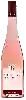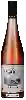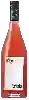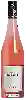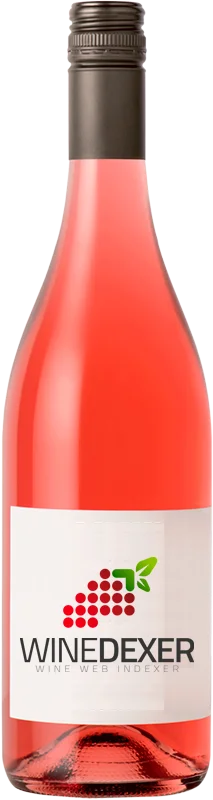
Winery StoiberBlaufränkisch Rosé
 Pink wine
This wine generally goes well with pork, rich fish (salmon, tuna etc) or mature and hard cheese.
Food and wine pairings with Blaufränkisch Rosé
Pairings that work perfectly with Blaufränkisch Rosé



Original food and wine pairings with Blaufränkisch Rosé
The Blaufränkisch Rosé of Winery Stoiber matches generally quite well with dishes of pork, rich fish (salmon, tuna etc) or mature and hard cheese such as recipes of brazilian feijoada, vitello tonnato or polenta with cheese.
Details and technical informations about Winery Stoiber's Blaufränkisch Rosé.
Discover the grape variety: Aromella
Interspecific crossing between traminette and 34 Ravat obtained in 1976 by Bruce Reisch at the Experimental Station of Cornell University in Geneva (United States). It must be noted that this variety can only be found in a few American wine regions, which means that its multiplication is very limited. In France, it is almost unknown.
Informations about the Winery Stoiber
The Winery Stoiber is one of of the world's greatest estates. It offers 3 wines for sale in the of Niederösterreich to come and discover on site or to buy online.

The wine region of Niederösterreich
Niederösterreich, or Lower Austria, is a wine region in the Northeast of Austria bordering Slovakia and the Czech Republic. It is the country's largest wine region, both geographically and in terms of production. There are around 28,000 hectares (69,000 acres) of vineyards. These are responsible for roughly half of Austria's total wine output.
The wine region of Weinland
Weinviertel DAC – whose name translates as "wine quarter" – is an appellation in Niederösterreich (Lower Austria). It is by far the largest Districtus Austriae Controllatus wine region in Austria. It was also the first Austrian wine region to be given that title, in 2002, with a DAC Reserve designation added in 2009. The designation applies only to white wines from the Grüner Veltliner Grape variety.
The word of the wine: Chaptalization
The addition of sugar at the time of fermentation of the must, an ancient practice, but theorized by Jean-Antoine Chaptal at the dawn of the 19th century. The sugar is transformed into alcohol and allows the natural degree of the wine to be raised in a weak or cold year, or - more questionably - when the winegrower has a harvest that is too large to obtain good maturity.