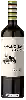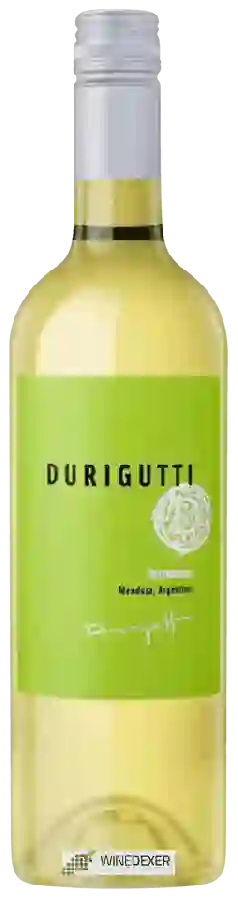
Winery DuriguttiTorrontés
 White wine


In the mouth this white wine is a powerful with a nice freshness.
This wine generally goes well with vegetarian, spicy food or aperitif.

Taste structure of the Torrontés from the Winery Durigutti
Light | Bold | |
Dry | Sweet | |
Soft | Acidic |
In the mouth the Torrontés of Winery Durigutti in the region of Mendoza is a powerful with a nice freshness.
Food and wine pairings with Torrontés
Pairings that work perfectly with Torrontés



Original food and wine pairings with Torrontés
The Torrontés of Winery Durigutti matches generally quite well with dishes of spicy food, vegetarian or aperitif such as recipes of chicken risotto with curry, leek, goat cheese and bacon quiche or stuffed sea almonds with cream cheese.
Details and technical informations about Winery Durigutti's Torrontés.
Discover the grape variety: Pinot Beurot
Structured, aromatic dry whites with a slightly deep golden hue, ample body and fresh acidity; signature aromas of yellow fruits (pear, quince), honey, gentle spices, smoke and Burgundian mineral notes. Fine ageing potential. A very minor traditional component of great white Burgundies, grown in tiny quantities in Bourgogne. Burgundian synonym for Pinot Gris, a grey-skinned mutation of Pinot Noir.
Last vintages of this wine
The best vintages of Torrontés from Winery Durigutti are 2012, 2016, 2014, 2011 and 2010.
Informations about the Winery Durigutti
The Winery Durigutti is one of of the world's great estates. It offers 64 wines for sale in the of Mendoza to come and discover on site or to buy online.

The wine region of Mendoza
World capital of Malbec: powerful, deep reds with blackberry, plum, violet and sweet spice, round tannins and vivid fruit. Also firm Cabernet Sauvignon, supple, juicy Bonarda, aromatic floral white Torrontés. High-altitude vineyards (800-1,700 m) at the foot of the Andes, dry continental climate irrigated by glacial waters. ~80% of Argentine output across 150,000 ha.
The word of the wine: Soft
Sweet wine containing between 30 and 50 grams of residual sugar. A sweet wine is made from very ripe grapes but without being affected by botrytis cinerea and without being raisined. This term can also be applied to a dry wine that is smooth and fat in the mouth.