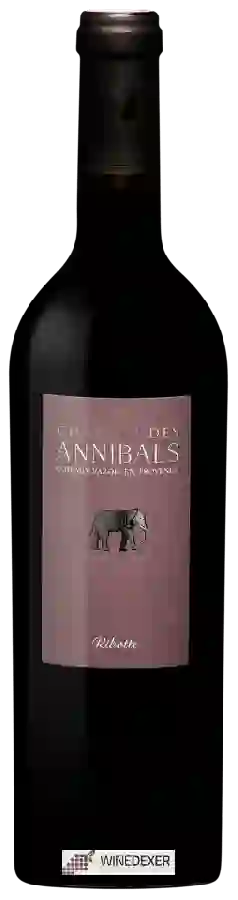
Château des AnnibalsLa Ribotte Coteaux Varois en Provence
 Red wine



This wine generally goes well with beef, lamb or mature and hard cheese.

Food and wine pairings with La Ribotte Coteaux Varois en Provence
Pairings that work perfectly with La Ribotte Coteaux Varois en Provence



Original food and wine pairings with La Ribotte Coteaux Varois en Provence

The La Ribotte Coteaux Varois en Provence of Château des Annibals matches generally quite well with dishes of beef, lamb or spicy food such as recipes of pasticcio (greece), lamb tagine with honey and dried fruits or pakistani rice (biryani).
Details and technical informations about Château des Annibals's La Ribotte Coteaux Varois en Provence.
Discover the grape variety: Red Globe
Table grape with long clusters and spherical red-purple berries, thin skin and crisp flesh, sweet fresh taste. Highly productive with excellent shelf life. One of the most exported table grapes worldwide, grown in California, China, Peru, Chile and Spain, massively distributed globally. Black American table grape variety obtained in 1958 in California by complex crossing for fresh consumption.
Last vintages of this wine
The best vintages of La Ribotte Coteaux Varois en Provence from Château des Annibals are 2014
Informations about the Château des Annibals
The Château des Annibals is one of of the world's greatest estates. It offers 9 wines for sale in the of Coteaux Varois en Provence to come and discover on site or to buy online.

The wine region of Coteaux Varois en Provence
Provençal AOC of the Var hinterland (28 villages, ~2,229 ha) tempered by the Sainte-Baume massif. Signature rosés dominate (91%): pale robe with signature notes of strawberry, grapefruit, white peach, flowers (rose, garrigue) and a citrus touch, fresh and thirst-quenching palate — more structured and mineral than the coast thanks to altitude. Cinsault, Grenache, Syrah, Mourvèdre at the base, local Tibouren. Supple cherry-garrigue reds, Rolle and Clairette whites.
The wine region of Provence
World capital of dry, refined rosé (~90% of production). Pale rose-petal colour, delicate nose of fresh red fruits (strawberry, raspberry, redcurrant), citrus (pink grapefruit), white flowers and a mineral touch, taut and thirst-quenching palate — the Mediterranean aperitif par excellence. Blends of Grenache, Cinsault, Syrah, Tibouren and Mourvèdre. Fleshy Bandol reds from Mourvèdre (leather, garrigue, age-worthy), straight Cassis whites.
The word of the wine: Barrel
Bordeaux barrel of 225 litres, used to determine the tonneau (unit of measurement corresponding to four barrels, or 900 litres).