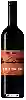
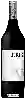
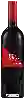
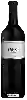
Winery Anita Nittnaus HansMartin Nittnaus Manila
 Red wine



In the mouth this red wine is a powerful with a nice balance between acidity and tannins.
This wine generally goes well with poultry, beef or pasta.
Taste structure of the Martin Nittnaus Manila from the Winery Anita Nittnaus Hans
Light | Bold | |
Smooth | Tannic | |
Dry | Sweet | |
Soft | Acidic |
In the mouth the Martin Nittnaus Manila of Winery Anita Nittnaus Hans in the region of Weinland is a powerful with a nice balance between acidity and tannins.
Wine flavors and olphactive analysis

On the nose the Martin Nittnaus Manila of Winery Anita Nittnaus Hans in the region of Weinland often reveals types of flavors of earth, red fruit or black fruit.
Food and wine pairings with Martin Nittnaus Manila
Pairings that work perfectly with Martin Nittnaus Manila



Original food and wine pairings with Martin Nittnaus Manila
The Martin Nittnaus Manila of Winery Anita Nittnaus Hans matches generally quite well with dishes of beef, pasta or poultry such as recipes of couscous without couscous maker, chinese noodles with vegetables and spices or chicken wrap.
Details and technical informations about Winery Anita Nittnaus Hans's Martin Nittnaus Manila.
Discover the grape variety: Muresconu
Muresconu noir is a grape variety that originated in France (Corsica). It produces a variety of grape especially used for the elaboration of wine. It is rare to find this grape to eat on our tables. Muresconu noir can be found in several vineyards: South-West, Cognac, Bordeaux, Provence & Corsica, Rhone Valley, Loire Valley, Savoie & Bugey, Beaujolais.
Last vintages of this wine
The best vintages of Martin Nittnaus Manila from Winery Anita Nittnaus Hans are 2018, 2015, 2016, 0 and 2019.
Informations about the Winery Anita Nittnaus Hans
The Winery Anita Nittnaus Hans is one of of the world's great estates. It offers 29 wines for sale in the of Burgenland to come and discover on site or to buy online.

The wine region of Burgenland
Burgenland is a large wine-producing region on the eastern border of Austria. Despite the country's image as the producer of some of the world's finest white wines, Austria is also home to a thriving red wine culture: Burgenland, with its sunny, continental summers, is the country's key red wine region, with its wines based mainly on the Blaufränkisch and Zweigelt grape varieties. Sweet, botrytized wines are also a specialty of the region, particularly in the Terroir surrounding the Neusiedlersee lake. The region occupies a narrow strip of land that runs from the Danube River down to Steiermark in the South.
The wine region of Weinland
Weinviertel DAC – whose name translates as "wine quarter" – is an appellation in Niederösterreich (Lower Austria). It is by far the largest Districtus Austriae Controllatus wine region in Austria. It was also the first Austrian wine region to be given that title, in 2002, with a DAC Reserve designation added in 2009. The designation applies only to white wines from the Grüner Veltliner Grape variety.
The word of the wine: Biodynamic (agriculture)
Organic agriculture is part of a vision of the world linking the plant and all living beings to the cosmos and basing work in the vineyard and the cellar on the cycles of the moon.