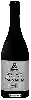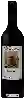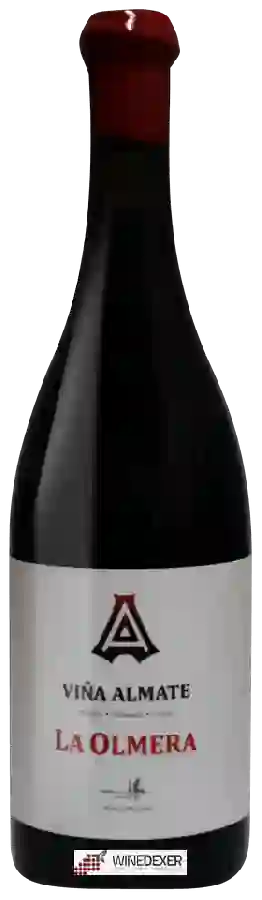
Winery Alfredo MaestroLa Olmera (Viña Almate)
 Red wine


In the mouth this red wine is a powerful with a lot of tannins present in the mouth.
This wine generally goes well with poultry, beef or veal.

Taste structure of the La Olmera (Viña Almate) from the Winery Alfredo Maestro
Light | Bold | |
Smooth | Tannic | |
Dry | Sweet | |
Soft | Acidic |
In the mouth the La Olmera (Viña Almate) of Winery Alfredo Maestro in the region of Castille-et-Léon is a powerful with a lot of tannins present in the mouth.
Wine flavors and olphactive analysis


On the nose the La Olmera (Viña Almate) of Winery Alfredo Maestro in the region of Castille-et-Léon often reveals types of flavors of earth, black fruit.
Food and wine pairings with La Olmera (Viña Almate)
Pairings that work perfectly with La Olmera (Viña Almate)



Original food and wine pairings with La Olmera (Viña Almate)

The La Olmera (Viña Almate) of Winery Alfredo Maestro matches generally quite well with dishes of beef, lamb or veal such as recipes of beef with onions chinese style, moussaka with spices or vienna cutlets.
Details and technical informations about Winery Alfredo Maestro's La Olmera (Viña Almate).
Discover the grape variety: Rondo
Colourful, fruity reds with a dense purple robe, supple tannins and fresh acidity. Aromas of black cherry, blackberry, plum, blackcurrant and spicy notes. Round palate, best drunk young. A very early-ripening, cold-hardy interspecific variety (to -25 °C), it drives northern viticulture in Germany, the UK, the Netherlands, Belgium, Denmark, Sweden and Poland. German hybrid created in 1964 at Geilweilerhof (Vitis amurensis × Saint-Laurent, descended from Zarya Severa).
Last vintages of this wine

The best vintages of La Olmera (Viña Almate) from Winery Alfredo Maestro are 2012, 0, 2013
Informations about the Winery Alfredo Maestro
The Winery Alfredo Maestro is one of of the world's great estates. It offers 24 wines for sale in the of Castille-et-Léon to come and discover on site or to buy online.

The wine region of Castille-et-Léon
Cradle of great Castilian reds on high-altitude plateaus (450-1000 m) of the Duero. Tempranillo king (Tinto Fino, Tinta de Toro): powerful, structured reds with notes of black cherry, blackberry, plum, leather and spices, firm tannins and length worthy of long ageing. Stars: Ribera del Duero (Vega Sicilia, Pingus), fleshy Toro, Bierzo (fresh mineral Mencía). Lively herbaceous Verdejo whites from Rueda, cut grass and citrus.
The word of the wine: Merithalle
Botanical term for the interval between two nodes or between two leaf insertions on a branch (see internode).