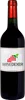
Winery AldingerHanweiler Berg Blaufränkisch Trocken
 Red wine



This wine generally goes well with pork, rich fish (salmon, tuna etc) or mature and hard cheese.
Food and wine pairings with Hanweiler Berg Blaufränkisch Trocken
Pairings that work perfectly with Hanweiler Berg Blaufränkisch Trocken



Original food and wine pairings with Hanweiler Berg Blaufränkisch Trocken

The Hanweiler Berg Blaufränkisch Trocken of Winery Aldinger matches generally quite well with dishes of pork, rich fish (salmon, tuna etc) or mature and hard cheese such as recipes of veal cutlets with savoy tomme, quiche with leeks and fresh salmon from flo or truffle with cantal and saint-nectaire cheese.
Details and technical informations about Winery Aldinger's Hanweiler Berg Blaufränkisch Trocken.
Discover the grape variety: Pinotin
Swiss interspecific cross obtained in 1991 by Valentin Blattner. The parents would be pinot noir and an interspecific variety resistant to diseases and, for others, it would be a cross between cabernet-sauvignon and ((sylvaner x riesling) x (12 417 Seyve-Villard x 7053 Seibel)) see graph www.winogrona.org. No resistance gene could be identified for either mildew or powdery mildew. It can be found in Switzerland, Belgium, Holland, Germany, ... still little known in France.
Last vintages of this wine
The best vintages of Hanweiler Berg Blaufränkisch Trocken from Winery Aldinger are 2016, 0
Informations about the Winery Aldinger
The Winery Aldinger is one of of the world's great estates. It offers 83 wines for sale in the of Württemberg to come and discover on site or to buy online.

The wine region of Württemberg
Württemberg is known as Germany's premier red wine region. With almost 11,500 hectares (28,500 acres) of vineyards, it is the fourth-largest wine region in the country. Found adjacent to Baden and South of Franken, Wüttemberg is a particularly hilly and rural wine-region. Almost 70-percent of Württemberg wines are red, predominantly made from Trollinger, SchwarzRiesling and Lemberger.
The word of the wine: Rosé de saignée
A method of making rosé wine that consists of partially draining a vat of red wine after a few hours of maceration. The longer the maceration, the stronger the colour. This practice gives rich and expressive rosés.