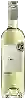
Winery Alde GottGrauer Burgunder Spätlese Trocken
 White wine



In the mouth this white wine is a powerful.
This wine generally goes well with pork, cured meat or mushrooms.
Taste structure of the Grauer Burgunder Spätlese Trocken from the Winery Alde Gott
Light | Bold | |
Dry | Sweet | |
Soft | Acidic |
In the mouth the Grauer Burgunder Spätlese Trocken of Winery Alde Gott in the region of Baden is a powerful.


Food and wine pairings with Grauer Burgunder Spätlese Trocken
Pairings that work perfectly with Grauer Burgunder Spätlese Trocken


Original food and wine pairings with Grauer Burgunder Spätlese Trocken

The Grauer Burgunder Spätlese Trocken of Winery Alde Gott matches generally quite well with dishes of pork, spicy food or mushrooms such as recipes of oven roasted rabbit that cooks itself!, hake fillet with curry or capon with straw wine.
Details and technical informations about Winery Alde Gott's Grauer Burgunder Spätlese Trocken.
Discover the grape variety: Ravat blanc
Interspecific crossing between Seibel 5474 (Seibel 405 x Seibel 867) and Chardonnay by Jean-François Ravat. After 1945, it was already considered a quality grape variety, and is now listed in the Official Catalogue of Vine Varieties, list A1.
Last vintages of this wine
The best vintages of Grauer Burgunder Spätlese Trocken from Winery Alde Gott are 2018, 2017, 0, 2016 and 2015.
Informations about the Winery Alde Gott
The Winery Alde Gott is one of of the world's great estates. It offers 80 wines for sale in the of Baden to come and discover on site or to buy online.

The wine region of Baden
Baden is the southernmost of Germany's 13 official wine regions. It is also the warmest. Its relatively sunny, DryClimate permits the production of good-quality Spätburgunder (Pinot Noir) and ripe, relatively Full-bodied">Full-bodied examples of Grauburgunder (Pinot Gris) and Weissburgunder (Pinot Blanc). These are often made in oaked styles.
The word of the wine: Disgorging (champagne)
This is the evacuation of the deposit formed by the yeasts during the second fermentation in the bottle, by opening the bottle. The missing volume is completed with the liqueur de dosage - a mixture of wine and cane sugar - before the final cork is placed. For some years now, some producers have been replacing this sugar with rectified concentrated musts (concentrated grape juice) which give excellent results. A too recent dosage (less than three months) harms the gustatory harmony of the champagne.