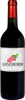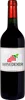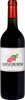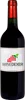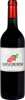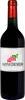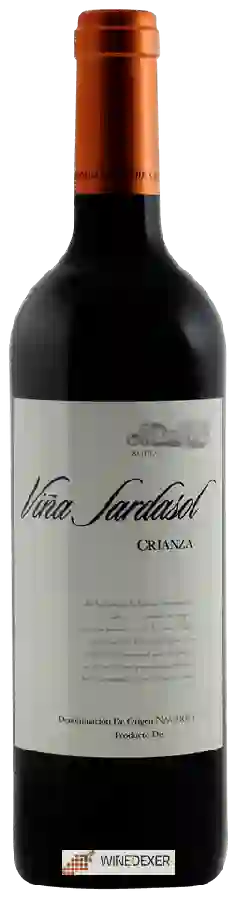
Bodegas AlcondeViña Sardasol Crianza
 Red wine



In the mouth this red wine is a powerful with a lot of tannins present in the mouth.
This wine generally goes well with poultry, beef or veal.

Taste structure of the Viña Sardasol Crianza from the Bodegas Alconde
Light | Bold | |
Smooth | Tannic | |
Dry | Sweet | |
Soft | Acidic |
In the mouth the Viña Sardasol Crianza of Bodegas Alconde in the region of Navarre is a powerful with a lot of tannins present in the mouth.
Wine flavors and olphactive analysis



On the nose the Viña Sardasol Crianza of Bodegas Alconde in the region of Navarre often reveals types of flavors of non oak, earth or oak and sometimes also flavors of spices, red fruit or black fruit.
Food and wine pairings with Viña Sardasol Crianza
Pairings that work perfectly with Viña Sardasol Crianza



Original food and wine pairings with Viña Sardasol Crianza

The Viña Sardasol Crianza of Bodegas Alconde matches generally quite well with dishes of beef, lamb or veal such as recipes of roast beef with pepper, pastasotto pepper merguez (risotto style pasta) or osso bucco of veal.
Details and technical informations about Bodegas Alconde's Viña Sardasol Crianza.
Discover the grape variety: Tempranillo
Elegant, structured reds with aromas of strawberry, cherry, plum, leather, blond tobacco and pronounced vanilla from long oak ageing. Ranges from Joven to Crianza, Reserva and Gran Reserva. Star of Rioja DOCa, Ribera del Duero DO and Toro DO, also shines in the Douro as Tinta Roriz/Aragonez. One of the world's most planted Spanish varieties.
Last vintages of this wine
The best vintages of Viña Sardasol Crianza from Bodegas Alconde are 2005, 2008, 2016, 2011 and 2015.
Informations about the Bodegas Alconde
The Bodegas Alconde is one of of the world's greatest estates. It offers 86 wines for sale in the of Navarre to come and discover on site or to buy online.

The wine region of Navarre
Spanish reference for great Garnacha rosés: raspberry-pink colour, notes of crushed strawberry, cherry, citrus and white flowers, dry and gourmet palate. The emblematic grape (~70% of reds in the past), also in supple, sun-filled reds. Tempranillo on the rise in modern blends, fine spicy Graciano, Cabernet and Merlot. Fresh Chardonnay and Viura whites.
The word of the wine: Juice
The juice of wine grapes (intended for wine making) is colourless. It is the anthocyanins contained in the grape skin that colour the juice during maceration.