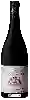
Winery Alain PerraudBourgogne Cuvée Marie Antoinette
 Red wine
This wine generally goes well with poultry, beef or veal.
Food and wine pairings with Bourgogne Cuvée Marie Antoinette
Pairings that work perfectly with Bourgogne Cuvée Marie Antoinette



Original food and wine pairings with Bourgogne Cuvée Marie Antoinette

The Bourgogne Cuvée Marie Antoinette of Winery Alain Perraud matches generally quite well with dishes of beef, veal or game (deer, venison) such as recipes of kamounia : tunisian beef stew, white wine fondue or alsatian wine pie.
Details and technical informations about Winery Alain Perraud's Bourgogne Cuvée Marie Antoinette.
Discover the grape variety: Corinthe
Would find its first origins in the islands of the Greek archipelago. According to a study conducted in collaboration with SupAgro-Montpellier (Hérault), it would be a relative of the pedro ximénes, for more information click here ! It can be found in Greece, Australia, South Africa, the United States (California), ... hardly cultivated in France except among a few amateur gardeners. In Italy, it is vinified to serve as a base for the production of many vermouths.
Informations about the Winery Alain Perraud
The Winery Alain Perraud is one of wineries to follow in Bourgogne.. It offers 2 wines for sale in the of Burgundy to come and discover on site or to buy online.

The wine region of Burgundy
Bourgogne is the catch-all regional appellation title of the Burgundy wine region in eastern France ("Bourgogne" is the French name for Burgundy). Burgundy has a Complex and comprehensive appellation system; counting Premier Cru and Grand Cru titles, the region has over 700 appellation titles for its wines. Thus, Burgundy wines often come from one Vineyard (or several separate vineyards) without an appellation title specific to the region, Village or even vineyard. A standard Burgundy wine may be made from grapes grown in one or more of Burgundy's 300 communes.
The word of the wine: Chaptalization
The addition of sugar at the time of fermentation of the must, an ancient practice, but theorized by Jean-Antoine Chaptal at the dawn of the 19th century. The sugar is transformed into alcohol and allows the natural degree of the wine to be raised in a weak or cold year, or - more questionably - when the winegrower has a harvest that is too large to obtain good maturity.