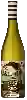
Winery Adega Marea AltaDo Zoe Albarino
 White wine



This wine generally goes well with
Wine flavors and olphactive analysis



On the nose the Do Zoe Albarino of Winery Adega Marea Alta in the region of Galice often reveals types of flavors of earth, microbio or tree fruit and sometimes also flavors of citrus fruit.
Details and technical informations about Winery Adega Marea Alta's Do Zoe Albarino.
Discover the grape variety: Roussanne
Roussane is a white grape variety, planted on an area of more than 700 ha. Originally from Montélimar, it is also found in Savoie, Languedoc and Roussillon, and grows very well in calcareous, poor, stony soil. It prefers to be pruned short. Roussane is also called fromenteau, barbin or bergeron. The young leaves are bubbled with fine down. When adult, they become thicker. It flowers in June and matures in mid-September. The grapes are cylindrical in shape, the berries are small and turn red when ripe, and the wine produced from pure Roussane is of extraordinary quality. It has a delicate aroma reminiscent of coffee, honeysuckle, iris and peony. The taste of this wine improves with age. It is part of the blend of the appellations Vin-de-Savoie, Côtes-du-Vallée du Rhône or Châteauneuf-du-Pape.
Last vintages of this wine
The best vintages of Do Zoe Albarino from Winery Adega Marea Alta are 2018, 2015, 2013, 0 and 2014.
Informations about the Winery Adega Marea Alta
The Winery Adega Marea Alta is one of of the world's greatest estates. It offers 3 wines for sale in the of Rías Baixas to come and discover on site or to buy online.

The wine region of Rías Baixas
The wine region of Rías Baixas is located in the region of Galice of Spain. Wineries and vineyards like the Domaine Raúl Pérez or the Domaine Pazo de Rubianes produce mainly wines white, sparkling and red. The most planted grape varieties in the region of Rías Baixas are Albarino, Loureiro and Caino blanco, they are then used in wines in blends or as a single variety. On the nose of Rías Baixas often reveals types of flavors of grapefruit, mint or chamomile and sometimes also flavors of apple blossom, green melon or beeswax.
The wine region of Galice
Galicia is one of the 17 first-level administrative regions (called comunidades autónomas) of Spain. It occupies the northwestern corner of the Iberian Peninsula, and is exposed on two sides to the Atlantic Ocean. To the South is Portugal, to the east Castilla y Leon. Viticulture has a Long tradition in Galicia, introduced to the region by the ancient Romans and continued by monks throughout the Middle Ages.
The word of the wine: Long
Wine with persistence in the mouth. This persistence in the mouth of a wine is measured in caudalies.