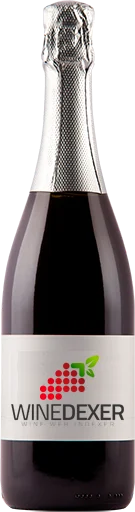
Winery A l' Ancien Moulin de l' AbbayeCremant d'Alsace Brut
 Sparkling wine
This wine generally goes well with poultry, appetizers and snacks or lean fish.

Food and wine pairings with Cremant d'Alsace Brut
Pairings that work perfectly with Cremant d'Alsace Brut



Original food and wine pairings with Cremant d'Alsace Brut


The Cremant d'Alsace Brut of Winery A l' Ancien Moulin de l' Abbaye matches generally quite well with dishes of shellfish, poultry or appetizers and snacks such as recipes of marmite dieppoise, mediterranean cake with parmesan and coppa gratin or tempura of vegetables and quick.
Details and technical informations about Winery A l' Ancien Moulin de l' Abbaye's Cremant d'Alsace Brut.
Discover the grape variety: Dawn seedless
Seedless table grape with long bunches and elongated golden berries, thin skin and crunchy flesh, with a neutral sweet flavour. Early ripening. Rarely vinified. Grown in California, Australia and Chile for export markets, prized for its attractive appearance, pleasant flavour and good cold-storage shelf life. American white seedless table grape variety, obtained by crossing for fresh consumption.
Informations about the Winery A l' Ancien Moulin de l' Abbaye
The Winery A l' Ancien Moulin de l' Abbaye is one of of the world's greatest estates. It offers 8 wines for sale in the of Crémant d'Alsace to come and discover on site or to buy online.

The wine region of Crémant d'Alsace
France's best-selling sparkling wine after Champagne. Fine traditional-method bubbles (min. 9 months on lees), fresh and fruity with signature notes of green apple, pear, white flowers and almond, a taut finish. Dominant Pinot Blanc (roundness, supple base), ample Pinot Auxerrois, mineral Riesling and taut Chardonnay.
The wine region of Alsace
Capital of great French aromatic whites, most often dry and single-varietal. Straight, mineral Riesling (lemon, gunflint), opulent, exuberant Gewurztraminer (lychee, rose, spices), round, smoky Pinot Gris, floral, crisp Muscat, supple Pinot Blanc. Fine, fruity Crémants d'Alsace, exceptional sweet Vendanges Tardives and Sélection de Grains Nobles. 15,500 ha at the foot of the Vosges on varied soils, 51 Grands Crus since 1975.
The word of the wine: Honest
A simple and pleasant wine, without any great quality and without any defects.