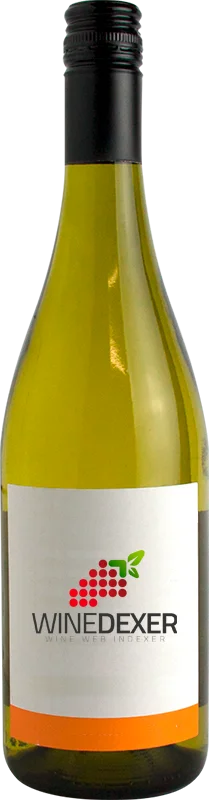
Winery Zurcher StadtweinChillesteig Höngg Räuschling
 White wine



This wine generally goes well with
Details and technical informations about Winery Zurcher Stadtwein's Chillesteig Höngg Räuschling.
Discover the grape variety: Acadie
Complex interspecific cross between 13 053 Seibel (7042 Seibel x 5409 Seibel) or cascade and 14 287 Seyve-Villard (6746 Seibel x Couderc 299-35) obtained in 1953 by Bradt Ollie A. at the Ontario Horticultural Research Institute (Canada). It can also be found in the United States and is almost unknown in France. From this same cross was born the veeblanc.
Last vintages of this wine
The best vintages of Chillesteig Höngg Räuschling from Winery Zurcher Stadtwein are 2018, 2017, 2015, 0 and 2014.
Informations about the Winery Zurcher Stadtwein
The Winery Zurcher Stadtwein is one of of the world's greatest estates. It offers 8 wines for sale in the of Zürich to come and discover on site or to buy online.

The wine region of Zürich
Zurich is a Swiss cantonal wine region covering all winegrowing sub-regions and vineyards within the borders of the Zurich canton. It is one of the more productive cantonal appellations in the German-speaking Northern Part of Switzerland. The main viticultural area here arches to the north, above the city of Winterthur, stretching up to Schaffhausen and even crossing the Rhine briefly around Eglisau, Rafz, Rudlingen, Wil and Huntwagen. This area is generally known as Zurcher Weinland, although as an area it is not precisely demarcated.
The word of the wine: Draft liquor (champagne)
After blending, the wine is bottled with a liqueur de tirage (a mixture of sugar and wine) and a yeast (selected yeasts). The yeast attacks the sugar and creates carbon dioxide. The fermentation, which lasts about two months, is prolonged by an ageing period (15 months minimum in total). The bottle is capped (some rare vintages are capped with a staple and a cork).