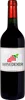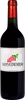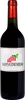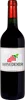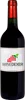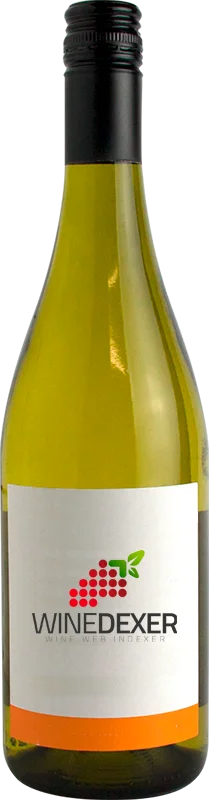
Winery ZehmerKreuznacher Römerhelde Sauvignon Blanc Spätlese Trocken
 White wine
In the mouth this white wine is a with a nice freshness.
This wine generally goes well with vegetarian, shellfish or goat cheese.
Taste structure of the Kreuznacher Römerhelde Sauvignon Blanc Spätlese Trocken from the Winery Zehmer
Light | Bold | |
Dry | Sweet | |
Soft | Acidic |
In the mouth the Kreuznacher Römerhelde Sauvignon Blanc Spätlese Trocken of Winery Zehmer in the region of Nahe is a with a nice freshness.
Food and wine pairings with Kreuznacher Römerhelde Sauvignon Blanc Spätlese Trocken
Pairings that work perfectly with Kreuznacher Römerhelde Sauvignon Blanc Spätlese Trocken


Original food and wine pairings with Kreuznacher Römerhelde Sauvignon Blanc Spätlese Trocken
The Kreuznacher Römerhelde Sauvignon Blanc Spätlese Trocken of Winery Zehmer matches generally quite well with dishes of shellfish, vegetarian or goat cheese such as recipes of marmite dieppoise, zucchini quiche or eggplant and pepper tatin with fresh goat cheese.
Details and technical informations about Winery Zehmer's Kreuznacher Römerhelde Sauvignon Blanc Spätlese Trocken.
Discover the grape variety: Acadie
Complex interspecific cross between 13 053 Seibel (7042 Seibel x 5409 Seibel) or cascade and 14 287 Seyve-Villard (6746 Seibel x Couderc 299-35) obtained in 1953 by Bradt Ollie A. at the Ontario Horticultural Research Institute (Canada). It can also be found in the United States and is almost unknown in France. From this same cross was born the veeblanc.
Informations about the Winery Zehmer
The Winery Zehmer is one of of the world's great estates. It offers 55 wines for sale in the of Nahe to come and discover on site or to buy online.

The wine region of Nahe
Nahe is one of the smaller German wine regions, named after the Nahe river which joins the Rhein at Rheinhessen/bingen">Bingen. The viticultural carea here is characterised by dramatic topography with steep slopes and craggy outcrops of metamorphic rock. Like most of the regions on or near the Rhine, its most prestigious wines are made from Riesling. There are around 4,000 hectares (10,000 acres) of Vineyards, spread across seven Grosslagen (wine districts) and over 300 Einzellagen (individual vineyard sites).
The word of the wine: Yeast
Micro-organisms at the base of all fermentative processes. A wide variety of yeasts live and thrive naturally in the vineyard, provided that treatments do not destroy them. Unfortunately, their replacement by laboratory-selected yeasts is often the order of the day and contributes to the standardization of the wine. Yeasts are indeed involved in the development of certain aromas.