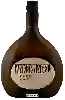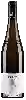
Winery Winzerhof NagelHolznagel Silvaner
 White wine


In the mouth this white wine is a with a nice freshness.
This wine generally goes well with pork, vegetarian or poultry.
Taste structure of the Holznagel Silvaner from the Winery Winzerhof Nagel
Light | Bold | |
Dry | Sweet | |
Soft | Acidic |
In the mouth the Holznagel Silvaner of Winery Winzerhof Nagel in the region of Franken is a with a nice freshness.
Food and wine pairings with Holznagel Silvaner
Pairings that work perfectly with Holznagel Silvaner



Original food and wine pairings with Holznagel Silvaner


The Holznagel Silvaner of Winery Winzerhof Nagel matches generally quite well with dishes of veal, pork or vegetarian such as recipes of potjevleesch (meat in a pot), croziflette or mushroom, bacon and gruyere quiche.
Details and technical informations about Winery Winzerhof Nagel's Holznagel Silvaner.
Discover the grape variety: Babic
This is an old indigenous variety that has been cultivated for a long time in Croatia, especially in central and southern Dalmatia. It can also be found in Hungary, in the former Yugoslavia to which Croatia belonged... in France it is almost unknown. It should be noted that it would be related with the dobricic and thus also with the plavac mali its son. Babic should not be confused with babica crni, another Croatian black grape variety.
Last vintages of this wine
The best vintages of Holznagel Silvaner from Winery Winzerhof Nagel are 0
Informations about the Winery Winzerhof Nagel
The Winery Winzerhof Nagel is one of of the world's greatest estates. It offers 19 wines for sale in the of Franken to come and discover on site or to buy online.

The wine region of Franken
Franken, or Franconia in English, is a wine-growing region in the northwest of Germany's historic state of Bavaria. Though Bavaria may be more famous for its beer, Franken boasts a proud viticultural tradition and is one of the most unique regions in the country. There are just over 6,100 hectares (15,073 ac) of vines Planted in Franken and around 80 percent of these are white Grape varieties. Here, Riesling plays second fiddle to the often overlooked Silvaner and Müller-Thurgau.
The word of the wine: Terroir
Strictly speaking, the notion of terroir corresponds to the geological characteristics of a vineyard. However, when we talk about terroir, we take into account the soil, the climate (even the microclimate), the flora, the fauna, and the human factor that characterizes the practices that make up the art of the craft.