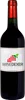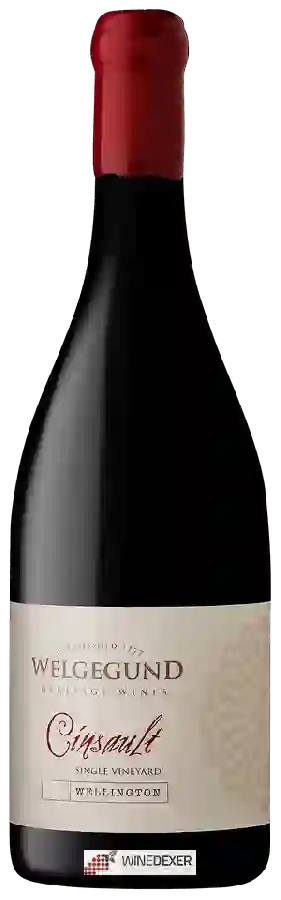
Winery WelgegundCinsault
 Red wine


This wine generally goes well with
Wine flavors and olphactive analysis


On the nose the Cinsault of Winery Welgegund in the region of Western Cape often reveals types of flavors of spices, red fruit.
Details and technical informations about Winery Welgegund's Cinsault.
Discover the grape variety: Isabelle
It was found in a garden in South Carolina in the United States and given to Isabella Gibbs. It can still be found in Brazil, India, Uruguay, Madagascar, Colombia, Switzerland, Italy, etc. In France, it is one of the six hybrids prohibited since 1935 (included in the European regulations): the Clinton, the Herbemont, the Isabelle, the Jacquez, the Noah and the Othello.
Last vintages of this wine
The best vintages of Cinsault from Winery Welgegund are 2017, 0
Informations about the Winery Welgegund
The Winery Welgegund is one of of the world's greatest estates. It offers 10 wines for sale in the of Wellington to come and discover on site or to buy online.

The wine region of Wellington
The wine region of Wellington is located in the region of Coastal Region of Western Cape of South Africa. Wineries and vineyards like the Domaine Andreas or the Domaine Diemersfontein produce mainly wines red, white and pink. The most planted grape varieties in the region of Wellington are Cabernet-Sauvignon, Merlot and Chenin blanc, they are then used in wines in blends or as a single variety. On the nose of Wellington often reveals types of flavors of plum, honey or nutmeg and sometimes also flavors of mushroom, rubber or cocoa.
The wine region of Western Cape
The Western Cape is home to the vast majority of the South African wine industry, and the country's two most famous wine regions, Stellenbosch and Paarl. The city of Cape Town serves as the epicenter of the Cape Winelands, a mountainous, biologically diverse area in the south-western corner of the African continent. A wide variety of wines are produced here. Wines from the Shiraz and Pinotage">Pinotage grape varieties can be fresh and juicy or Full-bodied and gutsy.
The word of the wine: Old vines
There are no specific regulations governing the term "vieilles vignes". After 20 to 25 years, the yields stabilize and tend to decrease, the vines are deeply rooted, and the grapes that come from them give richer, more concentrated, more sappy wines, expressing with more nuance the characteristics of their terroir. It is possible to find plots of vines that claim to be a century old.