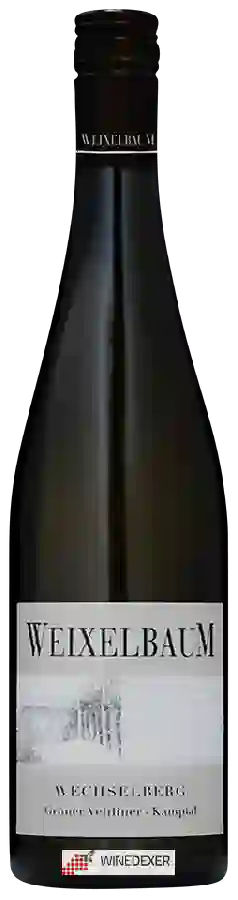
Winery WeixelbaumWechselberg Grüner Veltliner
 White wine



In the mouth this white wine is a with a nice freshness.
This wine generally goes well with pork, vegetarian or poultry.

Taste structure of the Wechselberg Grüner Veltliner from the Winery Weixelbaum
Light | Bold | |
Dry | Sweet | |
Soft | Acidic |
In the mouth the Wechselberg Grüner Veltliner of Winery Weixelbaum in the region of Weinland is a with a nice freshness.
Wine flavors and olphactive analysis

On the nose the Wechselberg Grüner Veltliner of Winery Weixelbaum in the region of Weinland often reveals types of flavors of earth, citrus fruit.
Food and wine pairings with Wechselberg Grüner Veltliner
Pairings that work perfectly with Wechselberg Grüner Veltliner



Original food and wine pairings with Wechselberg Grüner Veltliner


The Wechselberg Grüner Veltliner of Winery Weixelbaum matches generally quite well with dishes of pork, vegetarian or poultry such as recipes of stuffed peppers, quiche without eggs or imene's tunisian ojja.
Details and technical informations about Winery Weixelbaum's Wechselberg Grüner Veltliner.
Discover the grape variety: Cannonau
Powerful, sun-drenched reds with a dark ruby robe, fleshy tannins and a dense palate, showing signature aromas of ripe red fruits (cherry, blackberry), plum, Mediterranean garrigue, spice, pepper and balsamic notes. Fine ageing potential; also vinified as rosé and sweet wines. The undisputed star of Cannonau di Sardegna DOC, the identity signature of the island. The Sardinian synonym for Spanish and French Grenache, a grape found throughout the western Mediterranean.
Last vintages of this wine
The best vintages of Wechselberg Grüner Veltliner from Winery Weixelbaum are 2018, 0
Informations about the Winery Weixelbaum
The Winery Weixelbaum is one of of the world's great estates. It offers 36 wines for sale in the of Kamptal to come and discover on site or to buy online.

The wine region of Kamptal
Austrian star around Langenlois (Lower Austria): signature Grüner Veltliner DAC as the white king — concentrated and fruity-spicy with notes of citrus, green apple, stone fruits and a white pepper touch, taut acidity (loess and clay). Mineral, powerful Riesling on the steep terraces of the Heiligenstein (crystalline) — citrus, peach, flint and great ageing. Chardonnay and Pinots as support. Kamp valley, conglomerates and red sandstones, wines of character.
The wine region of Weinland
Vast German-speaking region in north-eastern Switzerland, the country's largest production area. Signature Pinot Noir (Blauburgunder): fine, fresh reds with notes of cherry, raspberry, undergrowth and sweet spices, silky tannins. Elegant, delicate style, often barrel-aged. Also light, floral Müller-Thurgau (Riesling-Sylvaner), lively, lemony native Räuschling, ample Pinot Gris.
The word of the wine: Harmonious
Balance of the different organoleptic elements of a wine. This harmony is linked to the typicity of each wine. The sweetness of a sweet wine is an element of its balance, whereas a Sancerre or a Chablis will be asked to be lively and dry.