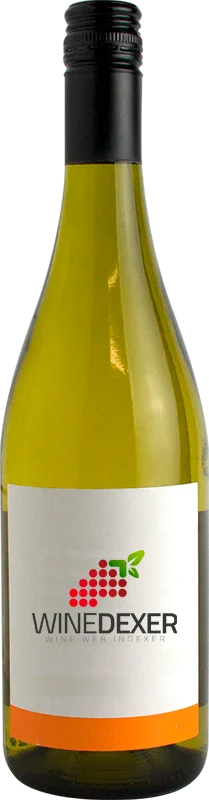
Weingut HeesWeissburgunder Trocken S
 White wine
In the mouth this white wine is a with a nice freshness.
This wine generally goes well with rich fish (salmon, tuna etc), shellfish or mild and soft cheese.
Taste structure of the Weissburgunder Trocken S from the Weingut Hees
Light | Bold | |
Dry | Sweet | |
Soft | Acidic |
In the mouth the Weissburgunder Trocken S of Weingut Hees in the region of Nahe is a with a nice freshness.
Food and wine pairings with Weissburgunder Trocken S
Pairings that work perfectly with Weissburgunder Trocken S



Original food and wine pairings with Weissburgunder Trocken S

The Weissburgunder Trocken S of Weingut Hees matches generally quite well with dishes of rich fish (salmon, tuna etc), shellfish or mild and soft cheese such as recipes of parillade of fish and seafood, carne de porco alentejana (sliced pork with vongoles) recipe... or veal saltimbocca.
Details and technical informations about Weingut Hees's Weissburgunder Trocken S.
Discover the grape variety: Ortega
An intraspecific cross between Müller-Thurgau and Siegerrebe obtained in 1948 by Hans Breider (1908-1960) at the Bavarian Research Station for Viticulture and Horticulture in Veitsnöchheim (Germany). Almost unknown in France, it can be found in Germany, Belgium, England, the United States and Canada. Its early maturity and muscatel taste have sometimes led to it being offered as a table grape on market stalls.
Informations about the Weingut Hees
The Weingut Hees is one of of the world's great estates. It offers 36 wines for sale in the of Nahe to come and discover on site or to buy online.

The wine region of Nahe
Nahe is one of the smaller German wine regions, named after the Nahe river which joins the Rhein at Rheinhessen/bingen">Bingen. The viticultural carea here is characterised by dramatic topography with steep slopes and craggy outcrops of metamorphic rock. Like most of the regions on or near the Rhine, its most prestigious wines are made from Riesling. There are around 4,000 hectares (10,000 acres) of Vineyards, spread across seven Grosslagen (wine districts) and over 300 Einzellagen (individual vineyard sites).
The word of the wine: Removal of shoes
In the spring, this operation consists of removing the mound of earth formed at the foot of the vines by ploughing between the rows in the autumn.