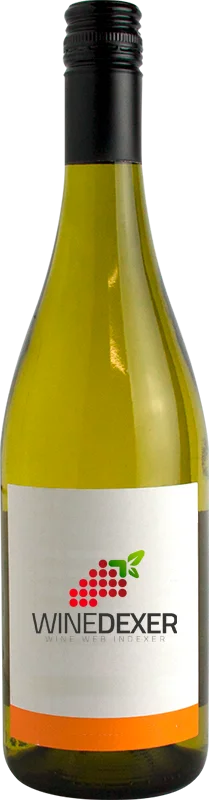
Weingut HeesBlanc de Noir
 White wine
This wine generally goes well with pork, poultry or veal.
Food and wine pairings with Blanc de Noir
Pairings that work perfectly with Blanc de Noir



Original food and wine pairings with Blanc de Noir


The Blanc de Noir of Weingut Hees matches generally quite well with dishes of veal, pork or game (deer, venison) such as recipes of gizzards in sauce, ham with leek fondue or rabbit with mustard, thyme and cream.
Details and technical informations about Weingut Hees's Blanc de Noir.
Discover the grape variety: Pinot noir
Pinot noir is an important red grape variety in Burgundy and Champagne, and its reputation is well known! Great wines such as the Domaine de la Romanée Conti elaborate their wines from this famous grape variety, and make it a great variety. When properly vinified, pinot noit produces red wines of great finesse, with a wide range of aromas depending on its advancement (fruit, undergrowth, leather). it is also the only red grape variety authorized in Alsace. Pinot Noir is not easily cultivated beyond our borders, although it has enjoyed some success in Oregon, the United States, Australia and New Zealand.
Informations about the Weingut Hees
The Weingut Hees is one of of the world's great estates. It offers 36 wines for sale in the of Nahe to come and discover on site or to buy online.

The wine region of Nahe
Nahe is one of the smaller German wine regions, named after the Nahe river which joins the Rhein at Rheinhessen/bingen">Bingen. The viticultural carea here is characterised by dramatic topography with steep slopes and craggy outcrops of metamorphic rock. Like most of the regions on or near the Rhine, its most prestigious wines are made from Riesling. There are around 4,000 hectares (10,000 acres) of Vineyards, spread across seven Grosslagen (wine districts) and over 300 Einzellagen (individual vineyard sites).
The word of the wine: Table wine
Everything that is not VQPRD (European designation for all appellation wines: quality wine produced in a specific region). In principle, the bottom of the ladder. But, as in Italy a decade ago (Vino da Tavola), this category is also a refuge for wines that are out of the ordinary, whose producers refuse to accept certain grape variety or vinification dictates.