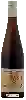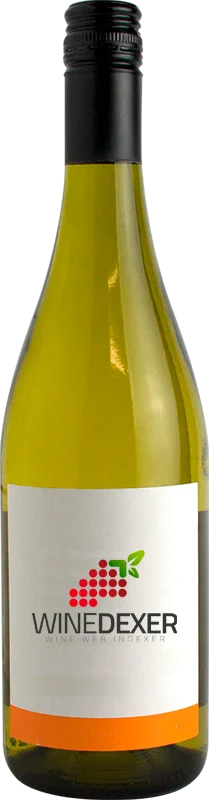
Winery BernhartGrauburgunder
 White wine


In the mouth this white wine is a .
This wine generally goes well with pork, cured meat or mushrooms.
Taste structure of the Grauburgunder from the Winery Bernhart
Light | Bold | |
Dry | Sweet | |
Soft | Acidic |
In the mouth the Grauburgunder of Winery Bernhart in the region of Pfalz is a .
Food and wine pairings with Grauburgunder
Pairings that work perfectly with Grauburgunder


Original food and wine pairings with Grauburgunder

The Grauburgunder of Winery Bernhart matches generally quite well with dishes of pork, spicy food or mushrooms such as recipes of very simple spaghetti carbonara, coconut curry cauliflower in the cookeo or rabbit with green olives.
Details and technical informations about Winery Bernhart's Grauburgunder.
Discover the grape variety: Merlot khorus
An interspecific cross between Merlot noir and Kozma 20-3 (also the same parents of Merlot Khantus) obtained in 2002 by Simone Diego Castellarin and Guido Cipriani at the Institute of Applied Genomics in Udine, Italy. Merlot khorus is particularly resistant to mildew and tolerant to powdery mildew. Known in Italy ... almost unknown in France, not registered in the Official Catalogue of wine grape varieties.
Last vintages of this wine
The best vintages of Grauburgunder from Winery Bernhart are 0
Informations about the Winery Bernhart
The Winery Bernhart is one of of the world's great estates. It offers 58 wines for sale in the of Pfalz to come and discover on site or to buy online.

The wine region of Pfalz
Pfalz is a key wine producing region in western Germany, located between the Rhein/Rhine river and the low-lying Haardt mountain range (a natural continuation of the Alsatian Vosges). It covers a rectangle of land 45 miles (75km) Long and 15 miles (25km) wide. To the NorthLiesRheinhessen; to the South, the French border and Alsace. In terms of both quality and quantity, Pfalz is one of Germany's most important regions, and one which shows great promise for the future.
The word of the wine: Dress
Visual aspect of the wine. The colour is defined by its intensity, clarity, brilliance and colour, which indicate the level of evolution of the wine, thus giving an indication of its vintage.