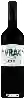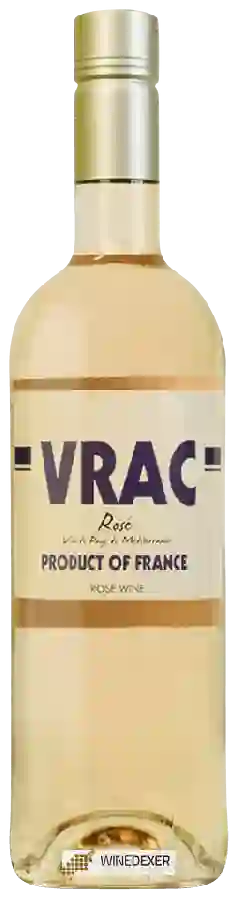
Winery VracRosé
 Pink wine



This wine generally goes well with beef, lamb or mature and hard cheese.

Wine flavors and olphactive analysis





On the nose the Rosé of Winery Vrac in the region of Méditerranée often reveals types of flavors of citrus, peach or green apple and sometimes also flavors of strawberries, banana or earth.
Food and wine pairings with Rosé
Pairings that work perfectly with Rosé



Original food and wine pairings with Rosé

The Rosé of Winery Vrac matches generally quite well with dishes of beef, lamb or spicy food such as recipes of oxtail with seed sauce, lamb tagine with honey and onions or turkey paupiettes in poultry sauce.
Details and technical informations about Winery Vrac's Rosé.
Discover the grape variety: Madeleine-Sylvaner
Aromatic, lively dry whites with a pale golden robe, a supple palate with preserved acidity, and signature muscat-like aromas, white flowers and citrus notes. Early-ripening and productive. Grown on small areas in Germany and England, well adapted to northern viticultural climates. German white variety obtained in 1932 at Alzey by Georg Scheu (Madeleine angevine × Sylvaner).
Last vintages of this wine
The best vintages of Rosé from Winery Vrac are 2018, 2016, 2019, 2017 and 2015.
Informations about the Winery Vrac
The Winery Vrac is one of of the world's greatest estates. It offers 7 wines for sale in the of Méditerranée to come and discover on site or to buy online.

The wine region of Méditerranée
Vast IGP of south-east France (Provence, Vaucluse, Var, Corsica, Ardèche), 75% rosés. Fresh, fruity rosés with signature notes of strawberry, raspberry, citrus, white flowers and a Mediterranean touch, taut and thirst-quenching on the palate — the quintessential sunny aperitif. Supple reds blending Grenache, Syrah, Cabernet and Merlot (red fruits, garrigue, spice), full whites of Viognier (apricot, flowers) and Chardonnay. Generous everyday wines, expression of the south.
The word of the wine: Tanin
A natural compound contained in the skin of the grape, the seed or the woody part of the bunch, the stalk. The maceration of red wines allows the extraction of tannins, which give the texture, the solidity and also the mellowness when the tannins are "ripe". The winemaker seeks above all to extract the tannins from the skin, the ripest and most noble. The tannins of the seed or stalk, which are "greener", especially in average years, give the wine hardness and astringency. The wines of Bordeaux (based on Cabernet and Merlot) are full of tannins, those of Burgundy much less so, with Pinot Noir containing little.