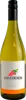
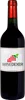
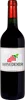
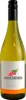
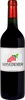
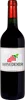
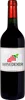
Winery HerzanoviFrankovka
 Red wine



This wine generally goes well with pork, rich fish (salmon, tuna etc) or mature and hard cheese.
Wine flavors and olphactive analysis

On the nose the Frankovka of Winery Herzanovi in the region of Morava often reveals types of flavors of oak, black fruit.
Food and wine pairings with Frankovka
Pairings that work perfectly with Frankovka



Original food and wine pairings with Frankovka

The Frankovka of Winery Herzanovi matches generally quite well with dishes of pork, rich fish (salmon, tuna etc) or mature and hard cheese such as recipes of broccoli gratin, tuna and goat cheese pie or chicken nuggets with cheese.
Details and technical informations about Winery Herzanovi's Frankovka.
Discover the grape variety: Ortega
An intraspecific cross between Müller-Thurgau and Siegerrebe obtained in 1948 by Hans Breider (1908-1960) at the Bavarian Research Station for Viticulture and Horticulture in Veitsnöchheim (Germany). Almost unknown in France, it can be found in Germany, Belgium, England, the United States and Canada. Its early maturity and muscatel taste have sometimes led to it being offered as a table grape on market stalls.
Last vintages of this wine
The best vintages of Frankovka from Winery Herzanovi are 2018, 2015, 0
Informations about the Winery Herzanovi
The Winery Herzanovi is one of of the world's greatest estates. It offers 14 wines for sale in the of Morava to come and discover on site or to buy online.

The wine region of Morava
Moravia, with roughly 95 percent of the nation's Vine plantings, is the engine room of the Czech Republic's wine industry. The Center of intensively farmed bulk-wine production is also showing great promise as a producer of quality white wines. This is largely thanks to its cool Climate, comparable in many ways to that in Nahe or Pfalz, the white-wine specialists a few hundred miles west in Germany. Moravian winelands enjoy a Vineyard year well suited to the production of Complex aromatics with good Acidity.
The word of the wine: Mercaptan
Organic compound resulting from the combination of alcohol and sulphide (H2S) producing an unpleasant odour reminiscent of town gas and rotten eggs.