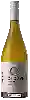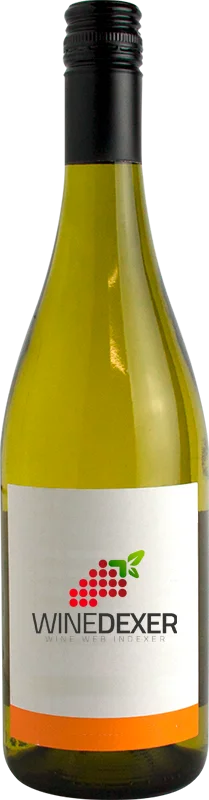
Winery Viña TinajasDel Sol Sauvignon Blanc Superior
 White wine
In the mouth this white wine is a with a nice freshness.
This wine generally goes well with vegetarian, shellfish or goat cheese.
Taste structure of the Del Sol Sauvignon Blanc Superior from the Winery Viña Tinajas
Light | Bold | |
Dry | Sweet | |
Soft | Acidic |
In the mouth the Del Sol Sauvignon Blanc Superior of Winery Viña Tinajas in the region of Central Valley is a with a nice freshness.
Food and wine pairings with Del Sol Sauvignon Blanc Superior
Pairings that work perfectly with Del Sol Sauvignon Blanc Superior



Original food and wine pairings with Del Sol Sauvignon Blanc Superior
The Del Sol Sauvignon Blanc Superior of Winery Viña Tinajas matches generally quite well with dishes of shellfish, vegetarian or goat cheese such as recipes of tagliatelle with seafood and saffron cream, quiche with leeks and fresh salmon from flo or zucchini pie with warm goat cheese.
Details and technical informations about Winery Viña Tinajas's Del Sol Sauvignon Blanc Superior.
Discover the grape variety: Flame seedless
Apyrene variety of table grapes obtained in 1961 in the United States (California) by John H. Weinberger and F.N. Harmon by complex crossing between (cardinal x sultanin) x [(molinera gorda x tifafihi ahmer ) x (muscat of Alexandria x sultanin)] and put in culture in 1973. It should be noted that the white Fresno seedless is the result of the same cross made by the same breeders. It can be found in Australia, Chile, Argentina, South Africa, Morocco, Tunisia, Spain, Portugal, Italy, Bulgaria, the United States (California) where it occupies a large area, etc. In France it is practically unknown, although it is registered in the Official Catalogue of table grape varieties, list A2.
Informations about the Winery Viña Tinajas
The Winery Viña Tinajas is one of of the world's great estates. It offers 62 wines for sale in the of Maule Valley to come and discover on site or to buy online.

The wine region of Maule Valley
Maule Valley is the largest wine-producing region in Chile other than the Central Valley, of which it is a Part. It has 75,000 acres (30,000ha) under Vine, and has traditionally been associated with quantity rather than quality. But this is rapidly changing – the bulk-producing Pais vine is gradually being replaced with more international varieties such as Cabernet Sauvignon and Carmenère, and careful winemaking practices are being employed to make some world-class red wines from old-vine Carignan. The Central Valley itself runs between the Andes and the Coastal Mountains from the Chilean capital of Santiago in the North to the up-and-coming region of Bío Bío in the South.
The wine region of Central Valley
The Central Valley (El Valle Central) of Chile is one of the most important wine-producing areas in South America in terms of Volume. It is also one of the largest wine regions, stretching from the Maipo Valley (just south of Santiago) to the southern end of the Maule Valley. This is a distance of almost 250 miles (400km) and covers a number of Climate types. The Central Valley wine region is easily (and often) confused with the geological Central Valley, which runs north–south for more than 620 miles (1000km) between the Pacific Coastal Ranges and the lower Andes.
The word of the wine: Liquid
Sweet wine containing more than 50 grams of residual sugar per liter. Sweet wines are made from grapes often affected by botrytis cinerea and concentrated either by passerillage (drying of the grapes on the vine stock), or after the harvest (straw wines), or by the cold (ice wines).