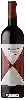
Winery Villa VestriSotto Il Vento Rosso Toscana
 Red wine


In the mouth this red wine is a .
This wine generally goes well with poultry, beef or veal.
Taste structure of the Sotto Il Vento Rosso Toscana from the Winery Villa Vestri
Light | Bold | |
Smooth | Tannic | |
Dry | Sweet | |
Soft | Acidic |
In the mouth the Sotto Il Vento Rosso Toscana of Winery Villa Vestri in the region of Tuscany is a .
Food and wine pairings with Sotto Il Vento Rosso Toscana
Pairings that work perfectly with Sotto Il Vento Rosso Toscana



Original food and wine pairings with Sotto Il Vento Rosso Toscana


The Sotto Il Vento Rosso Toscana of Winery Villa Vestri matches generally quite well with dishes of beef, lamb or veal such as recipes of chili con carne, lamb curry with coconut milk or wiener schnitzel or viennese schnitzel.
Details and technical informations about Winery Villa Vestri's Sotto Il Vento Rosso Toscana.
Discover the grape variety: Neheleschol
A very ancient table grape, it is mentioned in the Bible. Luigi and Alberto Pirovano of Vaprio d'Adda used it in many of their crosses. - Synonyms: neg(u)elescol, giant of Palestine, white grape of Jerusalem, eparce or eparse, yellow olivette with small berries, grape of Jericho (for all the synonyms of the grape varieties, click here!)
Last vintages of this wine
The best vintages of Sotto Il Vento Rosso Toscana from Winery Villa Vestri are 0
Informations about the Winery Villa Vestri
The Winery Villa Vestri is one of of the world's greatest estates. It offers 5 wines for sale in the of Tuscany to come and discover on site or to buy online.

The wine region of Tuscany
Tuscany is one of the most famous and prolific wine regions in Europe. It is best known for its Dry red wines made from Sangiovese grapes, which dominate production. These include Chianti, Brunello di Montalcino and Vino Nobile di Montepulciano. The region's Vin Santo is also highly prized, as are its passito dessert wines, though these are produced in comparatively tiny quantities.
The word of the wine: Pressing
Mechanical action consisting of pressing the grapes (before fermentation for whites) or the marc soaked in wine (after fermentation for reds).