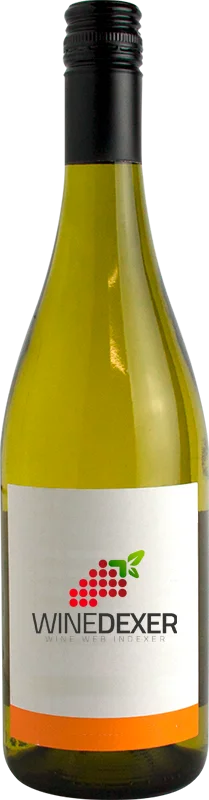
Winery Villa IlonaGrauburgunder Trocken
 White wine


This wine generally goes well with
Details and technical informations about Winery Villa Ilona's Grauburgunder Trocken.
Discover the grape variety: Gamay de Chaudenay
Unlike its dyer congeners, Gamay de Chaudenay is said to have "white juice". It is a cross between white gouais and pinot noir that gave birth to this grape variety from the north of Lyon, and its alternative names are Olivette Beaujolaise, Gamay de Caudoz and Gamay d'Arcenant. It is a variety that buds early in the year and is susceptible to wood diseases and excoriosis. Its three-lobed, finely serrated leaves are almost round and hairless. The youngest leaves are slightly shiny and yellowish-green in color. The plant matures in the first late season and bears small clusters, winged or not, of cylindrical shape. These clusters contain medium-sized, ovoid, grayish-black berries. The skin provides a dark coloured pulp when ripe. When vinified, the Gamay de Chaudenay gives a wine that is low in tannin but rather colourful. Notes of spice and fruit characterize the warm but short-lived wines that emerge.
Last vintages of this wine
The best vintages of Grauburgunder Trocken from Winery Villa Ilona are 0
Informations about the Winery Villa Ilona
The Winery Villa Ilona is one of of the world's greatest estates. It offers 7 wines for sale in the of Hungary to come and discover on site or to buy online.

The wine region of Hungary
Hungary, in Central Europe, has gained its reputation in the wine world through just a couple of wine styles, but for centuries it has been a wine-producing nation of considerable diversity. In addition to the Sweet wines of Tokaj and the Deep Bull's Blood of Eger, the Hungarian wine portfolio includes Dry whites from the shores of Lake Balaton, Somló and Neszmély, and finer reds from various regions, notably Villány, Sopron and Szekszard. Hungarian wine culture stretches back to Roman times and has survived numerous political, religious and economic challenges, including Islamic rule during the 16th Century (when Alcohol was prohibited) and the Phylloxera epidemic of the late 1800s. The modern Hungarian wine regions are distributed around the country.
The word of the wine: Disgorging (champagne)
This is the evacuation of the deposit formed by the yeasts during the second fermentation in the bottle, by opening the bottle. The missing volume is completed with the liqueur de dosage - a mixture of wine and cane sugar - before the final cork is placed. For some years now, some producers have been replacing this sugar with rectified concentrated musts (concentrated grape juice) which give excellent results. A too recent dosage (less than three months) harms the gustatory harmony of the champagne.