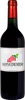
Winery MundusSyrah
 Red wine


In the mouth this red wine is a powerful with a lot of tannins present in the mouth.
This wine generally goes well with poultry, beef or veal.

Taste structure of the Syrah from the Winery Mundus
Light | Bold | |
Smooth | Tannic | |
Dry | Sweet | |
Soft | Acidic |
In the mouth the Syrah of Winery Mundus in the region of Lisboa is a powerful with a lot of tannins present in the mouth.
Wine flavors and olphactive analysis

Food and wine pairings with Syrah
Pairings that work perfectly with Syrah



Original food and wine pairings with Syrah

The Syrah of Winery Mundus matches generally quite well with dishes of beef, pasta or veal such as recipes of stuffed peppers, cannelloni with salmon and spinach or veal blanquette à l'ancienne.
Details and technical informations about Winery Mundus's Syrah.
Discover the grape variety: Aranel
Simple, fresh dry whites with a pale golden robe, a supple palate and preserved acidity. Understated aromas of citrus (lemon), white fruits (apple), white flowers and herbaceous notes. Thirst-quenching profile, best drunk young. Grown in Languedoc-Roussillon and the South-West for IGP wines, used in modern southern blends. Productive French white grape obtained in 1962 at Montpellier by Paul Truel, a cross of Saint-Pierre Doré × Grenache Blanc.
Last vintages of this wine

The best vintages of Syrah from Winery Mundus are 2015, 0, 2008
Informations about the Winery Mundus
The Winery Mundus is one of of the world's great estates. It offers 48 wines for sale in the of Lisboa to come and discover on site or to buy online.

The wine region of Lisboa
Vast coastal IGP north of Lisbon, Portugal's largest producer by volume. Accessible, sun-filled reds: fruity, spicy Castelão, dense Touriga Nacional (black fruit, violet), fleshy Trincadeira, deep Alicante Bouschet. Fresh, mineral whites: straight, lemony Arinto (star of Bucelas), aromatic Fernão Pires, round Vital and Malvasia. Structured reds from Alenquer, sparkling at Óbidos.
The word of the wine: Local wine
Table wine, but with the origin indicated. It corresponds to a particular legislation: the freedom to use grape varieties is greater than for the AOC, but the quality criteria such as the approval tastings can sometimes be more demanding. The legislation is still evolving, but for the moment there are three levels: regional (e.g. Vin de Pays d'Oc), departmental and local (e.g. Côtes de Thongue).