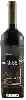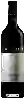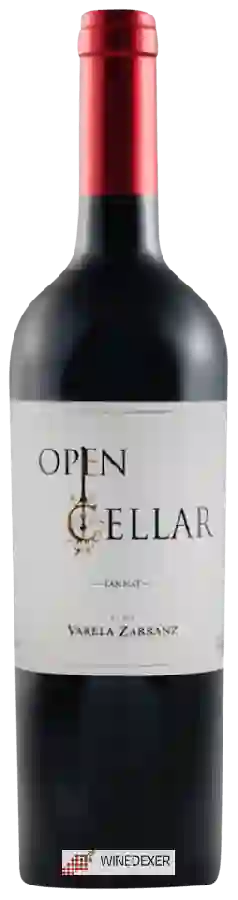
Winery Varela ZarranzOpen Cellar Tannat
 Red wine


In the mouth this red wine is a powerful with a nice balance between acidity and tannins.
This wine generally goes well with beef, game (deer, venison) or lamb.
The Open Cellar Tannat of the Winery Varela Zarranz is in the top 70 of wines of Canelones.

Taste structure of the Open Cellar Tannat from the Winery Varela Zarranz
Light | Bold | |
Smooth | Tannic | |
Dry | Sweet | |
Soft | Acidic |
In the mouth the Open Cellar Tannat of Winery Varela Zarranz in the region of Canelones is a powerful with a nice balance between acidity and tannins.
Food and wine pairings with Open Cellar Tannat
Pairings that work perfectly with Open Cellar Tannat



Original food and wine pairings with Open Cellar Tannat
The Open Cellar Tannat of Winery Varela Zarranz matches generally quite well with dishes of beef, lamb or game (deer, venison) such as recipes of beer goulash, lamb tagine with apricots (morocco) or aiguillette of duck normandy style.
Details and technical informations about Winery Varela Zarranz's Open Cellar Tannat.
Discover the grape variety: Tannat
Powerful, tannic reds with inky colour and dense texture, with aromas of blackberry, blackcurrant, black plum, leather, liquorice and smoky notes. Very high ageing potential and polyphenol content (health reputation). Star of Madiran AOC in Béarn and the national grape of Uruguay (Canelones, Maldonado). Also grown in Irouléguy and Tursan. Late-ripening red variety from south-west France.
Last vintages of this wine

The best vintages of Open Cellar Tannat from Winery Varela Zarranz are 2017, 2016, 0, 2015
Informations about the Winery Varela Zarranz
The Winery Varela Zarranz is one of of the world's greatest estates. It offers 35 wines for sale in the of Canelones to come and discover on site or to buy online.

The wine region of Canelones
Uruguay's main region north of Montevideo (~90% of national output). National star Tannat: powerful, structured reds with signature notes of blackberry, black plum, violet, leather, tobacco and spice, firm tannins and notable ageing potential — more Tannat planted here than in Madiran, its birthplace. Also round Merlot, peppery Cabernet Franc, spicy Syrah. Fresh saline Albarino whites.
The word of the wine: Yeast
Micro-organisms at the base of all fermentative processes. A wide variety of yeasts live and thrive naturally in the vineyard, provided that treatments do not destroy them. Unfortunately, their replacement by laboratory-selected yeasts is often the order of the day and contributes to the standardization of the wine. Yeasts are indeed involved in the development of certain aromas.